
The gaming world is still reverberating from the seismic impact of Baldur’s Gate 3, a title that not only redefined the modern CRPG but also propelled Larian Studios into the stratosphere of game development royalty. Yet, as of 2026, the excitement has been tempered by a bittersweet reality: Larian has definitively closed the book on any sequel, choosing to pour its creative energy into wholly original projects. This decision has left Wizards of the Coast holding a legendary franchise without its star quarterback. For many, the logical next step would be to find a new studio to craft Baldur’s Gate 4, but that path increasingly resembles trying to plant a sapling in the crater left by a fallen redwood—the shadow is simply too immense. Instead, a much smarter, and perhaps more rewarding, strategy is emerging: resurrecting another dormant Dungeons & Dragons legend, Neverwinter Nights.
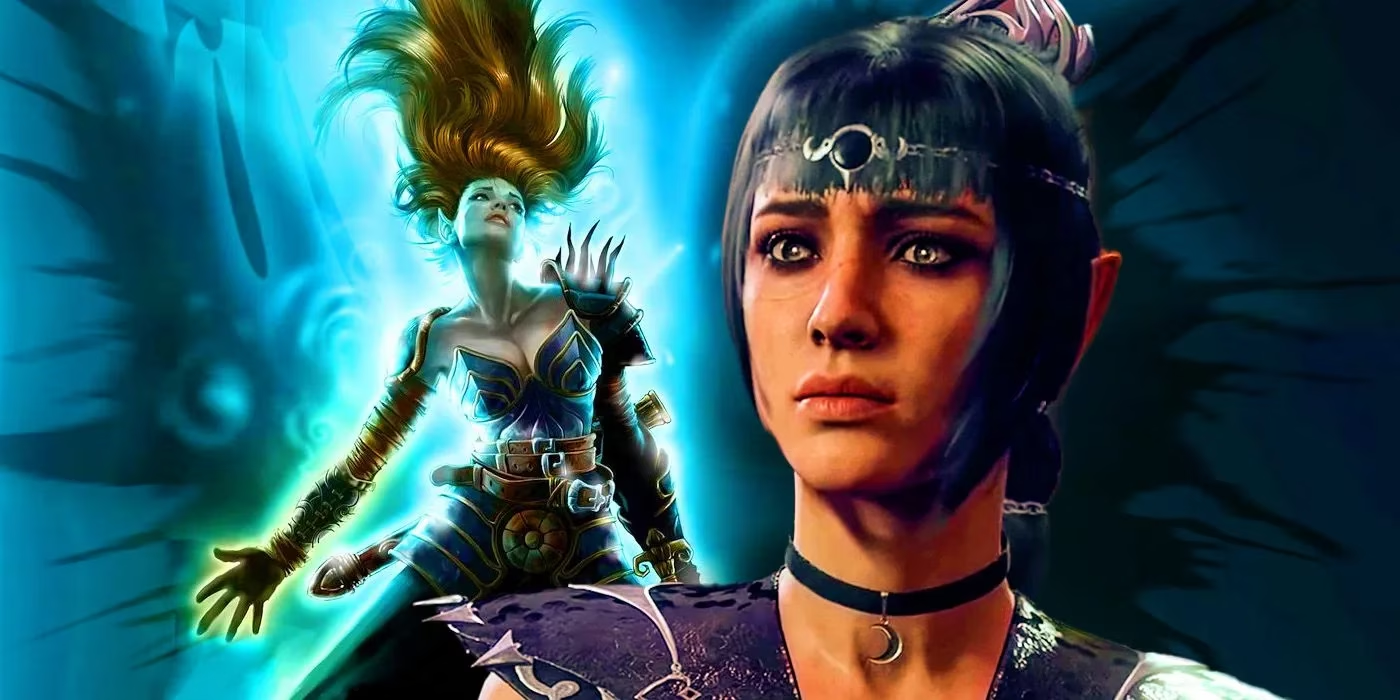
Unlike the Larian-shaped Baldur’s Gate, Neverwinter Nights occupies a parallel yet distinct lane. The series, launched in 2002 with a sequel in 2006, is not merely an echo of its more famous cousin. While both are CRPGs rooted in the Forgotten Realms and use D&D rulesets, Neverwinter Nights was always conceived as something of a digital playground. Its core innovation was the Aurora toolset, a robust engine that allowed players to craft their own modules, campaigns, and entire worlds using the D&D 3rd Edition system. This gave the game a half-life measured in decades; the Enhanced Edition still hums with activity today, a dedicated community churning out content that no AAA studio could ever match. This modular DNA means Neverwinter Nights 3 wouldn’t just be a game—it would be a platform, a perpetual-motion engine for collaborative storytelling that could run for years on community fumes alone.
Conventional wisdom might suggest that Wizards of the Coast would want to capitalize on the mainstream brand recognition of Baldur’s Gate, but that brand is now a double-edged longsword. Any Baldur’s Gate 4 would be scrutinized under a microscope the size of the Astral Plane, with every dialogue tree, combat encounter, and romantic subplot measured against Larian’s masterpiece. It’s a poisoned chalice; the sheer weight of expectation could crush even a competent effort. A new Neverwinter Nights, however, sidesteps this trap. Its name carries nostalgia without the suffocating pressure of a direct lineage to a Game of the Year winner. It’s the difference between being asked to write the next chapter of a beloved novel and being invited to pen a new story in the same universe—far fewer critics will be holding a red pen.
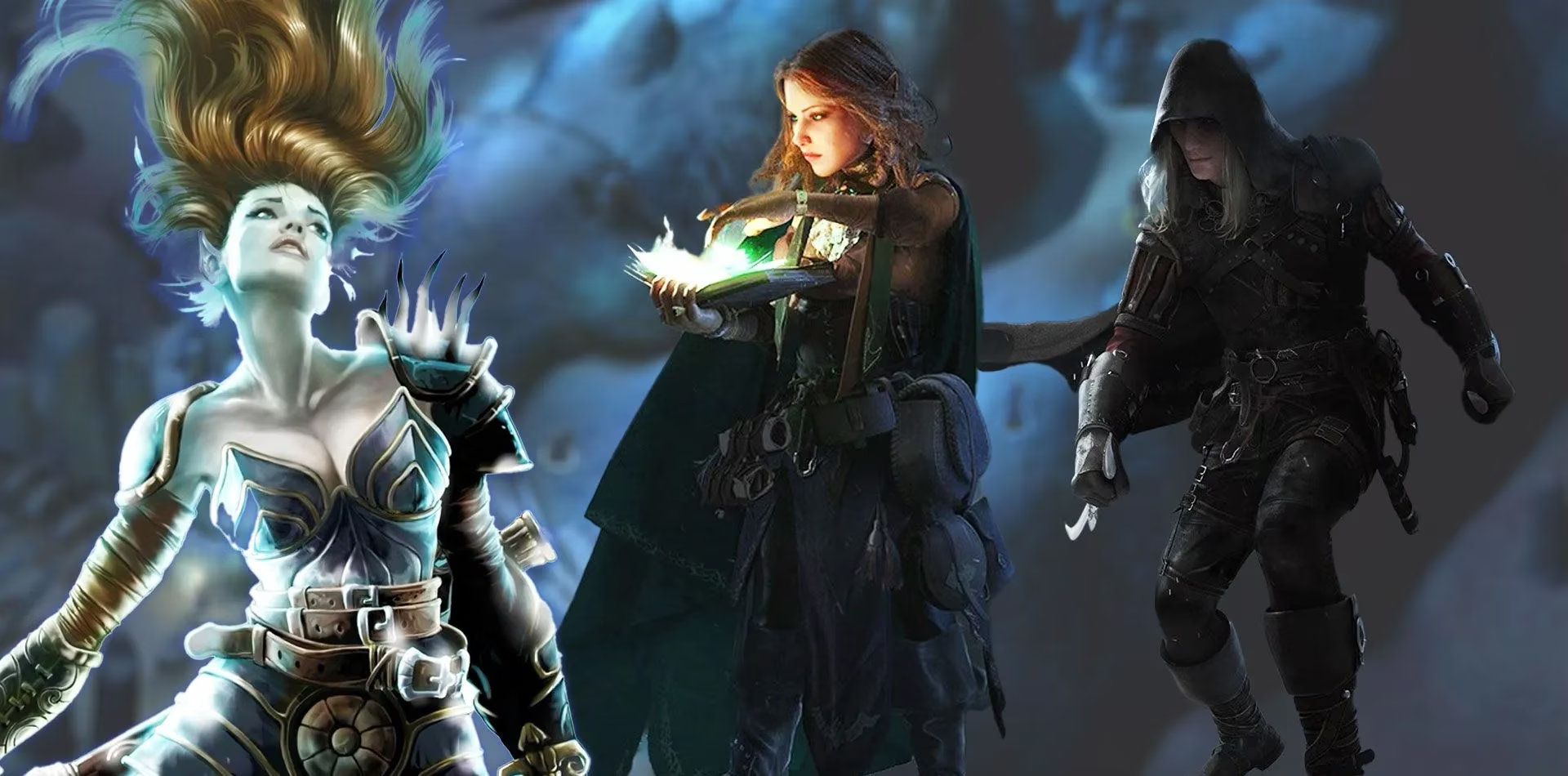
Who, then, should helm this revival? The answer for many fans has been clear for years: Obsidian Entertainment. The studio’s pedigree in the CRPG space is virtually unmatched, from the spiritual successors of Pillars of Eternity to their foundational work alongside BioWare on the Neverwinter Nights franchise itself. Obsidian already developed Neverwinter Nights 2, making them the natural custodian of its legacy. With the successful launch of Avowed in 2024, Obsidian has demonstrated it can marry deep narrative with first-person immersion, but its soul remains in the isometric, choice-driven storytelling that made Pillars a modern classic. Without a current CRPG series to tend—the world of Eora now being firmly established in Avowed—Obsidian has the creative bandwidth and the institutional knowledge to step into the role. It would be a homecoming, not a handoff.
A 2026 Neverwinter Nights 3 would also benefit from a technological and systemic reset. The new D&D 2024 ruleset has already refreshed the tabletop landscape, and a CRPG built from the ground up for these updated mechanics would feel genuinely innovative. Imagine the original’s toolset philosophy modernized: a powerful, user-friendly creation suite integrated with official D&D 2024 content, allowing dungeon masters and players to sculpt their own campaigns with current-generation fidelity. This would transform the game into the digital equivalent of an infinite bag of holding, overflowing with player-made adventures that keep the experience fresh long after the official campaign concludes. Moreover, Obsidian could shatter the expectation of a turn-based Baldur’s Gate clone by offering a real-time-with-pause system, or a hybrid model like Pillars of Eternity II: Deadfire, giving the title a distinct tactical identity that feels both retro and modern.
While Baldur’s Gate 3 remains the undisputed titan of the genre, its very success has made a direct sequel a thankless endeavor. Neverwinter Nights 3 doesn’t need to compete with Larian’s golden goose; it can build a different kind of nest entirely. By focusing on community-driven longevity, leveraging Obsidian’s narrative expertise, and decoupling itself from the suffocating legacy of the BG3 phenomenon, a new Neverwinter Nights could not only fill the void left by Larian’s departure but redefine what a D&D video game can be in the process.
As the gaming industry continues to evolve, keeping up with the latest releases and innovations can be both exciting and overwhelming. Whether you're a fan of classic CRPGs or eager to explore the next big title, there’s never been a better time to dive into the ever-expanding universe of gaming. A revival like Neverwinter Nights 3 might just mark a new chapter in gaming history, blending nostalgia with groundbreaking mechanics that cater to both veteran players and newcomers.
If you're looking to expand your library and prepare for the next wave of unforgettable adventures, be sure to check out the best game deals today. With a wide range of offerings, it's the perfect place to discover great discounts on both timeless classics and the latest titles that are shaping the future of gaming.