
When the dust settled after Baldur's Gate 3's meteoric launch in 2023, its cast of companions had ascended to the pantheon of modern gaming icons. From Astarion's razor-sharp sarcasm to Karlach's heart-on-her-sleeve passion, each character carved out a permanent home in players' hearts. However, as we look towards the inevitable sequel in 2026, a glaring structural flaw in the party lineup becomes impossible to ignore: a profound lack of species diversity. The Faerûn we explore is a vibrant tapestry of cultures and creatures, yet our core adventuring group feels like a curated slice, missing the full, chaotic spectrum that defines the Dungeons & Dragons experience.
🎭 Too Many Pointy Ears and Smooth Faces
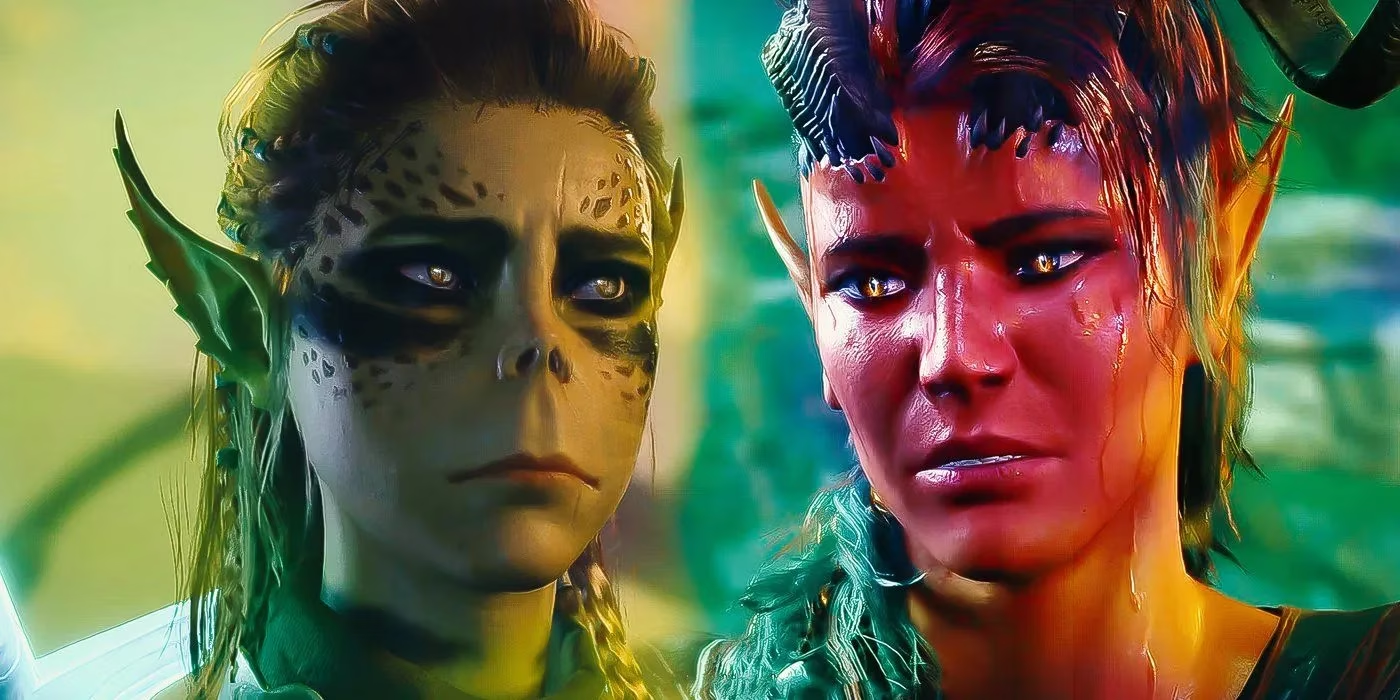
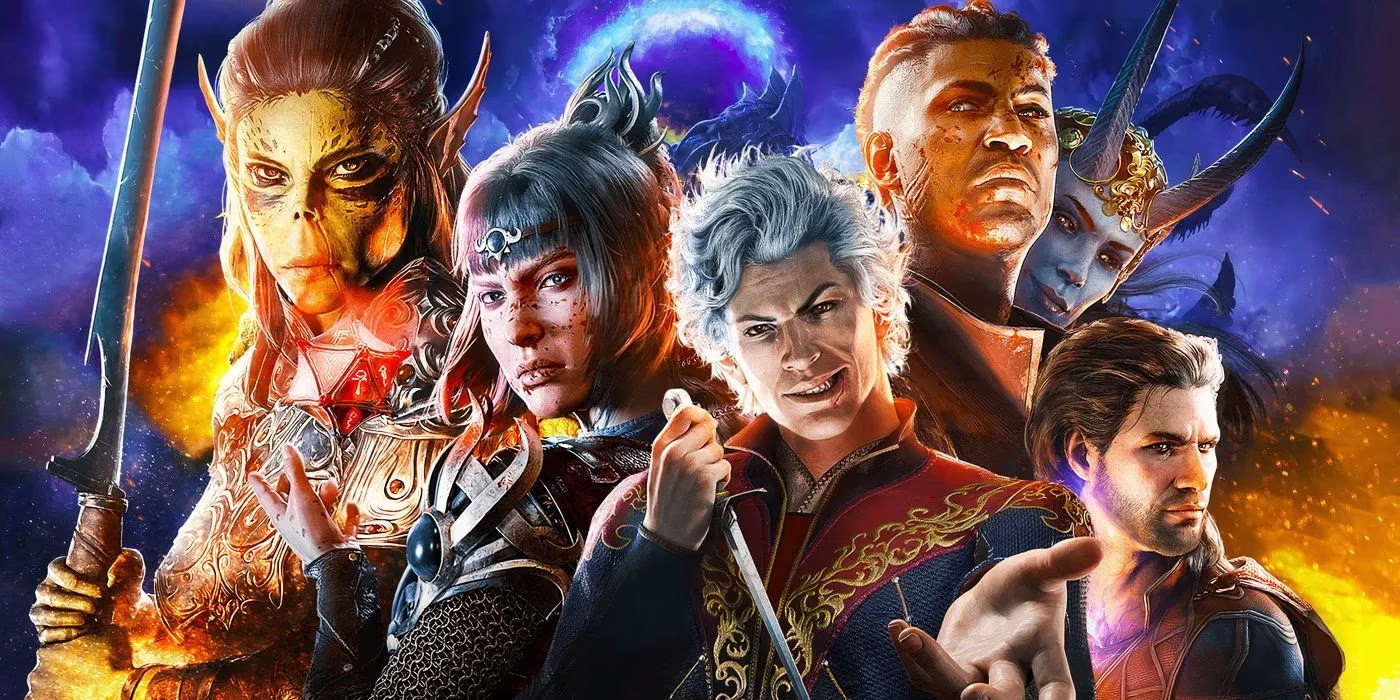
Let's break down the numbers, fam. The game offers ten recruitable companions. Now, do a quick mental roll call: eight of them are either human, elf, or a half-elf. That's a staggering 80%! The only glorious exceptions are Lae'zel the githyanki and Karlach the tiefling. Sure, there's nuance within that elf bloc—Minthara is a drow from the Underdark, and Astarion is a vampiric high elf—but that's like saying a buffet only serves different types of potato; it's still just potatoes! 🥔
This becomes even more jarring when you look at the character creation screen. Players can choose from eleven distinct species:
-
Human
-
Elf / Drow
-
Half-Elf
-
Dwarf
-
Halfling
-
Gnome
-
Half-Orc
-
Tiefling
-
Dragonborn
-
Githyanki
Yet, the core party leaves entire swathes of this roster completely unrepresented. Where are the stout, ale-loving dwarves? The nimble, lucky halflings? The hulking, misunderstood half-orcs? Their absence is like an orchestra missing its brass and percussion sections—the melody might be there, but the soul and depth are tragically muted.
⚙️ Why Was the Party So... Basic?
It's highly unlikely the geniuses at Larian Studios just forgot about dwarves. The leading theory points to technical and production challenges. BG3 features thousands of hours of meticulously motion-captured dialogue. Translating an actor's nuanced facial performance onto the snout of a dragonborn or the broad features of a dwarf is a monumental task. It's the difference between tailoring a suit for a humanoid form and engineering one for a being whose skeleton is as familiar as an alien artifact.
However—and this is a big however—Larian already proved they could do it! The world of Faerûn is populated by a stunning array of NPCs from all species. From deep gnome merchants in the Underdark to dragonborn guards in Baldur's Gate itself, the diversity is there. Seeing this rich tapestry in the background makes the homogeneous foreground party feel like a conscious, perhaps unfortunate, choice. Characters like the deep gnome Barcus Wroot, who practically lives at your camp, tease what could have been—a missed opportunity as palpable as finding a locked chest without a key.
📖 The Story Cost of a Limited Cast
This lack of diversity isn't just a cosmetic or mechanical issue; it actively limits the narrative potential. Lae'zel's entire arc is a riveting tapestry woven from the threads of githyanki culture, creche upbringing, and interplanar conflict. It's a story only a githyanki could tell.
Now, imagine the untold stories:
-
A dwarf companion grappling with the loss of a sacred clan hold to the Absolute.
-
A halfling rogue whose inherent luck is tested by the mind-flayer parasite.
-
A half-orc struggling with societal prejudice while trying to be a hero.
By omitting these species, BG3 inadvertently silences a chorus of unique perspectives. The game's story is a masterfully painted mural, but it's missing several of the vibrant colors available on the palette.
Furthermore, the companion lineup feels like a puzzle with duplicate pieces. We get two druids (Halsin and Jaheira) but zero monks or bards in the base recruitment. This lack of class diversity, coupled with the species issue, can make party composition feel restrictive. You can respec Astarion into a barbarian, but you can't change the fundamental fact that he, Gale, and Minthara all share a magical lineage that grants them the same Fire Bolt cantrip. It gets repetitive!
🔮 The Future: Baldur's Gate 4 and the New D&D Landscape
As we gaze into the crystal ball for a potential Baldur's Gate 4, the landscape has fundamentally shifted. The foundational Dungeons & Dragons rules received a major update in 2024. A sequel won't just be building on the 5th Edition rules BG3 used; it will have to integrate the new core rules.
The 2024 Player's Handbook expanded the species roster even further, officially adding fan favorites like:
-
Goliaths (towering mountain folk)
-
Orcs
-
Aasimars (celestial-touched beings)
This isn't just more options for player characters; it's a mandate for greater representation. If the sequel follows Larian's precedent of sticking close to the core rulebook, then the companion roster has a phenomenal opportunity to correct course. The sequel's party should look less like a royal court and more like a tavern at the crossroads of the multiverse—a beautiful, chaotic mess of different shapes, sizes, and stories.
In a traditional D&D tabletop game, a party might consist of a gnome artificer, a dragonborn paladin, a halfling rogue, and an orc bard. That wild, unpredictable synergy is one of the game's greatest joys. Baldur's Gate 3, for all its perfection, offered a more curated, less zoologically adventurous experience. As D&D itself evolves to be more inclusive and varied, the video games it inspires must follow suit.
Baldur's Gate 3 is a legendary game, a titan whose shadow will define the CRPG genre for years. But its companion roster's lack of species diversity is its Achilles' heel, a single flat note in an otherwise symphonic masterpiece. For the sequel, the hope is for a party as diverse and unforgettable as the myriad adventuring parties sitting around real-world tables today. The foundation is peerless; now it's time to build a more colorful, more representative house on it. 🏰✨
| Species | Represented in BG3 Party? | Example NPC in World? |
|---|---|---|
| Human | ✅ (Wyll) | ✅ Abundant |
| Elf/High Elf | ✅ (Astarion) | ✅ Abundant |
| Drow | ✅ (Minthara) | ✅ Yes |
| Half-Elf | ✅ (Shadowheart) | ✅ Yes |
| Dwarf | ❌ | ✅ Yes |
| Halfling | ❌ | ✅ Yes |
| Gnome | ❌ | ✅ Yes (Barcus) |
| Half-Orc | ❌ | ✅ Yes |
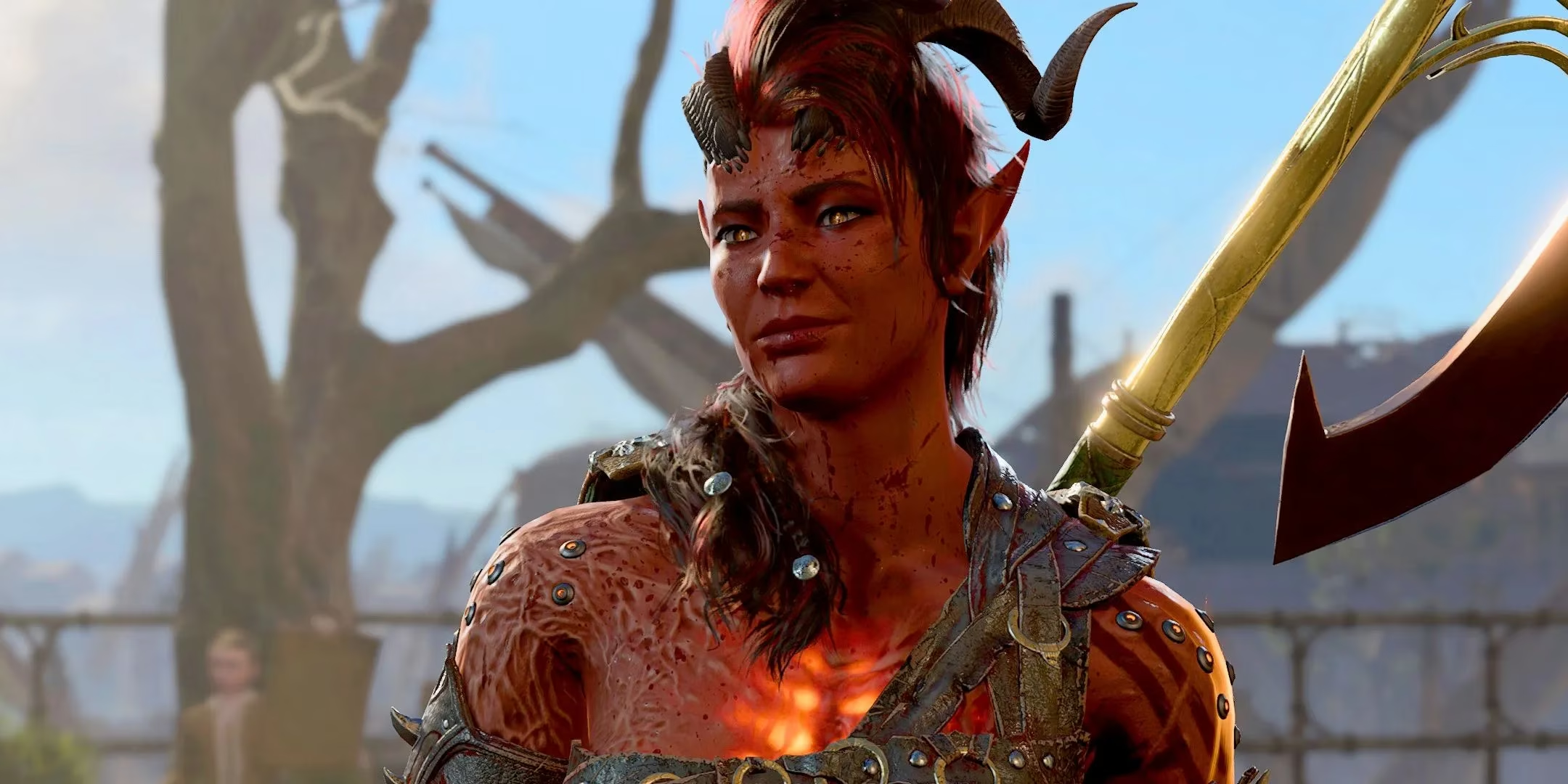
| Tiefling | ✅ (Karlach) | ✅ Yes |
| Dragonborn | ❌ | ✅ Yes |
| Githyanki | ✅ (Lae'zel) | ✅ Yes |
Table showing the stark gap between world representation and companion representation.