
I still remember the first time I sat down with a tabletop RPG character sheet and felt that rush: the dizzying number of feats, classes, and weird little abilities that could turn a blank page into someone entirely unique. That feeling never left me, and over the years I have chased it through single-player video games. In 2026, looking back, I realize that the best experiences are not always the ones with the most powerful builds—they are the ones that reward creativity and let me play my way.
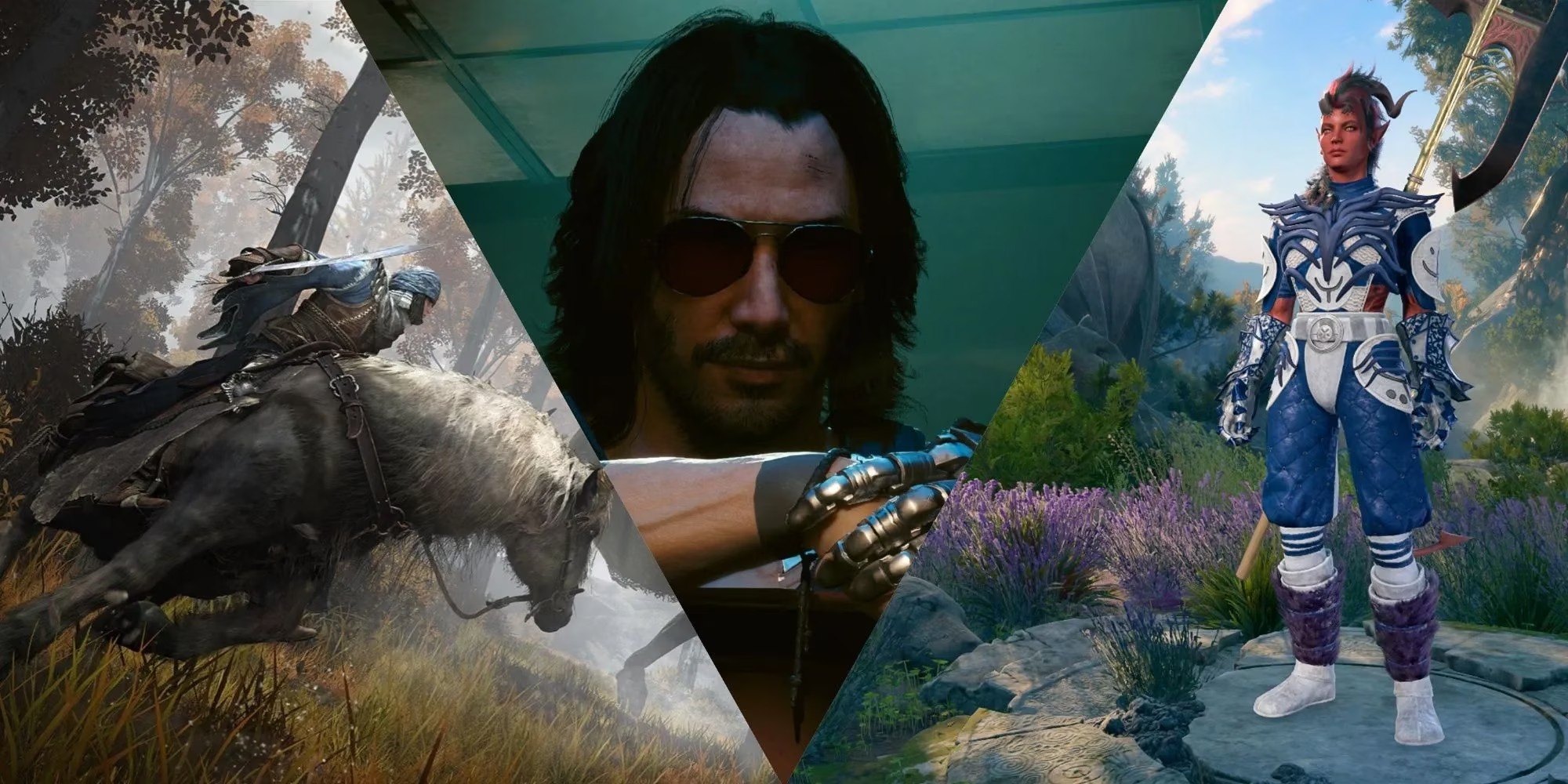
Why do some games click with me forever while others fade after one run? Usually it comes down to one question: can I start again as someone completely different and still have fun? If the answer is yes, I am hooked.
Pathfinder: Wrath of the Righteous is probably the closest thing to a digital tabletop sandbox I have ever touched. I dragged a character all the way to level 20 and still felt I had only scratched the surface. There are so many classes, mythic paths, and feats that no two playthroughs need to look alike. Sure, some combinations are stronger than others, but the game does not punish you harshly for wanting to try a weird hybrid. Have you ever built a character around a single strange feat just to see if it could survive? In Pathfinder, that experiment can turn into a whole campaign.
Then there is Baldur's Gate 3. I will admit I spent more time in the character creator and respec screen than in some entire games. The fact that I can respec not just my own character but every companion means the whole party becomes a playground. Patch 7 made the mod tools official, and by 2026 the community has produced an overwhelming amount of new subclasses, spells, and gear. The game is not the most mechanically complex isometric RPG, but it might be the most inviting. I once turned Lae'zel into a bard just to see if she would sing her way through the Shadow-Cursed Lands. She did, and it was glorious.
Final Fantasy Tactics is a nostalgia trip that still holds up. Its job system let me mix classes in ways that felt genuinely creative. I remember building a chemist with knight abilities, or a black mage with ninja speed, and watching the battlefield tilt in my favor. The story was already excellent, but the freedom to customize made me replay it over and over. Is there any better feeling than watching a weird job combination finally click against a boss that once destroyed you?
Cyberpunk 2077 changed dramatically after the 2.0 patch. The skill overhaul opened up whole new ways to handle Night City. I started one run as a quiet netrunner who never fired a bullet, then came back as a katana-wielding maniac, and later as a shotgun specialist who solved every problem with overwhelming noise. Each build felt legitimate. The game finally matched its tabletop roots, letting different combinations of abilities and cyberware be equally effective. The city stopped being a shooting gallery and became a testing ground for my own choices.
Wasteland 3 rarely gets the same attention, but it deserves a mention. I loved building not just one character but an entire squad around synergies. The ability to respec story companions meant I could chase the perfect team composition without starting over. Turn-based combat became a puzzle where my builds were the pieces. Have you ever reloaded a fight just to see how a different formation would play out? I have, many times.
Darkest Dungeon is a different beast. Build variety comes from mixing characters, each with their own quirks and abilities. But here, death is permanent, and that changes everything. I had to recruit and train new heroes constantly, often after a mission went horribly wrong. That constant churn forced me to experiment with combinations I would never have tried otherwise. The fun is not just in making a powerful team—it is in making a desperate team work.
Hades, especially the first game, made every escape attempt feel fresh. The weapons are only the beginning; boons and aspects reshape the entire run. In the early attempts, I could not fully manipulate what came next, which meant I had to adapt. Some combinations were absurdly strong, others lacked synergy, but there was always room to explore. By the time I reached the surface, I had played dozens of different builds without ever feeling bored.
Elden Ring took FromSoftware's build freedom to another level. I could respec, swap weapons, change spells, and fine-tune attributes until my character felt truly mine. One moment I was a heavy strength bruiser, the next a fragile sorcerer, then a bleed-focused duelist. The Lands Between rewarded every playstyle, and that flexibility turned a difficult game into a personal journey. Did my build make the final boss easier? Sometimes. But it always made the fight feel like my own.
Fallout: New Vegas remains a masterclass in role-playing. I could be a charismatic diplomat, a stealthy sniper, or a clever scientist, and the game would acknowledge those choices. The skill, attribute, and perk systems had real consequences in dialogue and mission outcomes. It did not just allow experimentation; it rewarded it. I still remember talking my way out of a fight and realizing the game had been waiting for me to try that.
Finally, The Elder Scrolls 5: Skyrim. Even after all these years, I find myself returning. The freedom to combine magic, melee, and stealth means every new character feels like a blank canvas. The skill and perk system lets me define my own path, so one adventure can be a pure mage and the next a sneaky archer with a dagger. It may not be the deepest system on this list, but it is one of the most personal.
Here is a quick look at the build styles that kept me experimenting:
| Game | Build style I loved |
|---|---|
| Pathfinder: WotR | Mythic hybrid builds |
| Baldur's Gate 3 | Full party respec with mods |
| Cyberpunk 2077 | Netrunner, katana, shotgun |
| Elden Ring | Strength, sorcery, bleed |
| Fallout: New Vegas | Diplomat, sniper, scientist |
| Skyrim | Mage, stealth archer, spellblade |
So why does build variety matter so much to me? Because it turns a single-player game into a conversation. The world asks a question, and my build is the answer. Whether I am crafting a doomed party in Darkest Dungeon or a demigod in Elden Ring, the freedom to experiment keeps me coming back. What kind of character will you create next?