
As a seasoned player who has explored every corner of Faerûn, I can confidently say the Bard remains one of the most versatile and rewarding classes in Baldur's Gate 3, even years after its release. My journey from a simple performer to a master of enchantment and battlefield control has been defined by the incredible array of spells at my disposal. While many focus on the Bard's charismatic prowess in dialogue, the true power of this class lies in its magical repertoire, which allows me to shape the flow of combat, protect my allies, and utterly dismantle my foes. With over 50 different spells to choose from, crafting the perfect spellbook is both an art and a science, and through countless adventures, I've identified the spells that are absolutely indispensable for any aspiring virtuoso of the arcane.
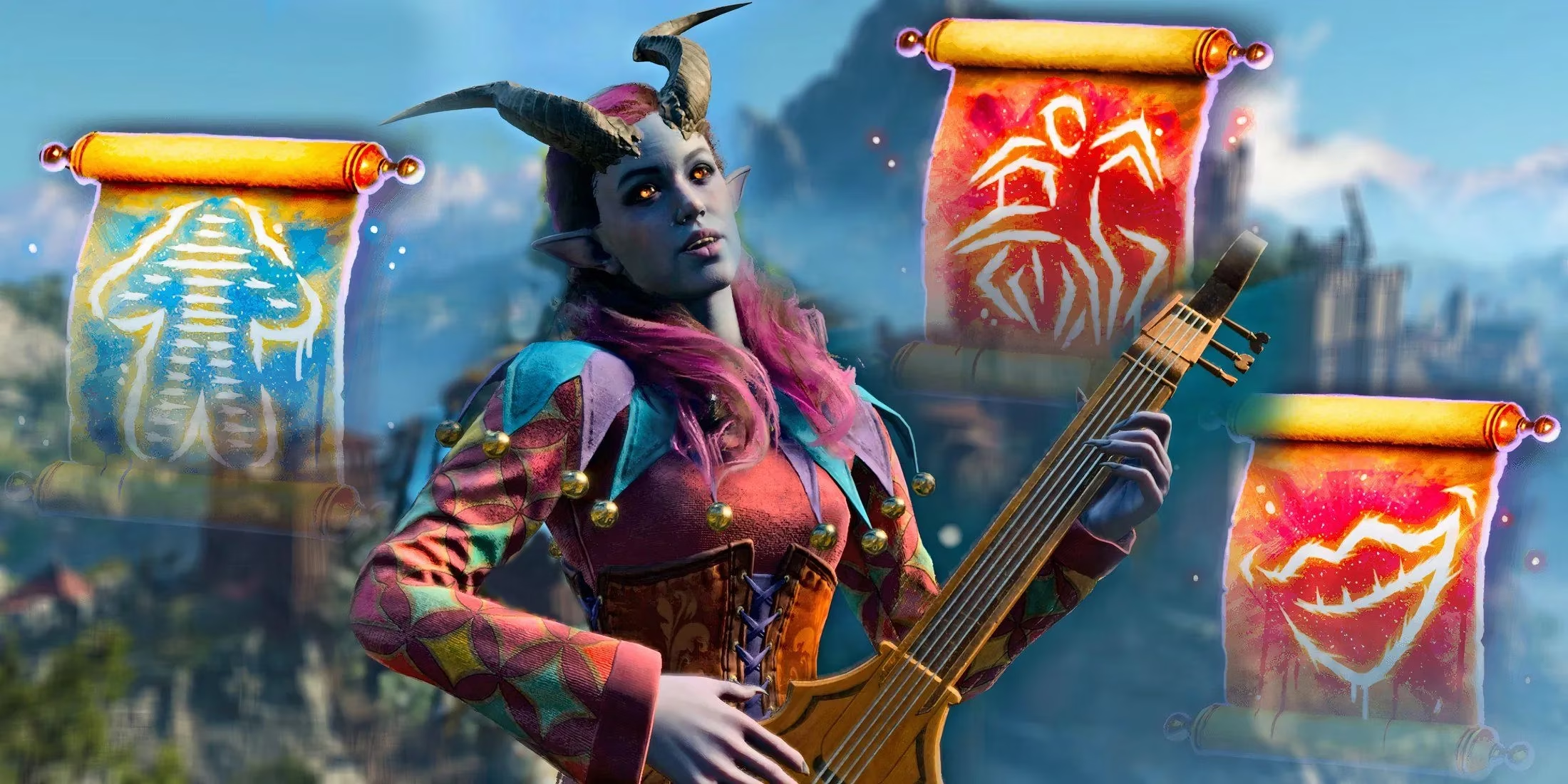
Let's start with the fundamentals that carry you from the humble beginnings on the Nautiloid to the climactic battles in the Upper City. Tasha's Hideous Laughter is, without a doubt, my go-to spell in the early game. The sheer utility of rendering a dangerous enemy prone for up to ten turns cannot be overstated. I remember using it to incapacitate a particularly nasty Gnoll leader, watching as my party systematically dismantled his pack while he was helpless with magical giggles. Its low cost and universal applicability mean it never truly falls out of favor, remaining a reliable tool in my kit for disabling key threats throughout the entire campaign. It requires concentration, yes, but careful positioning and target selection make this a cornerstone of Bardic control.
Equally crucial for party survival is Heroism. In those early, perilous levels where a single critical hit can spell disaster, this spell is a lifeline. Casting it on my frontline warrior before a tough fight grants them not only immunity to fear effects—invaluable against creatures like Phase Spiders or certain undead—but also a steady stream of temporary hit points. This buff transforms a squishy fighter into a resilient bastion, allowing them to hold the line while I orchestrate the battle from the rear. It’s a spell that exemplifies the Bard's role as the party's heart, bolstering courage and resilience when it's needed most.
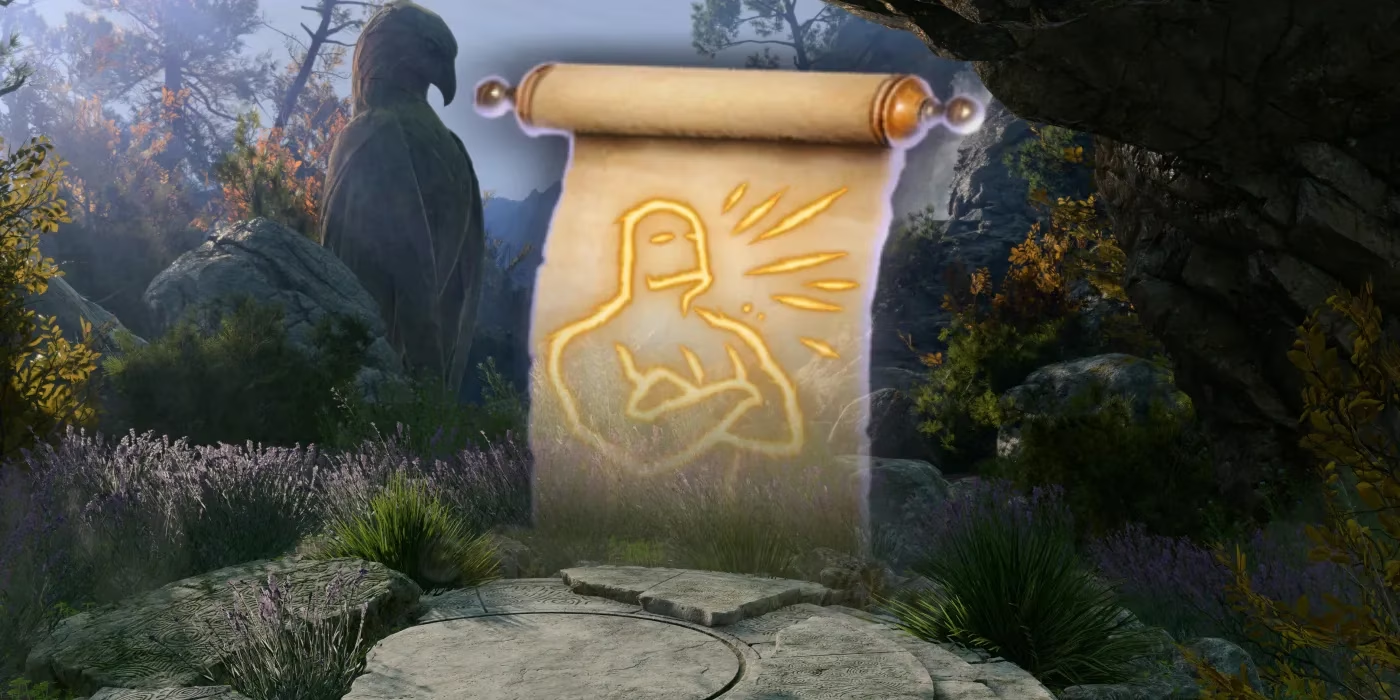
As I progressed and gained access to more potent magics, my role evolved from a simple supporter to a master of the battlefield itself. Glyph of Warding became one of my favorite tools for area denial and control. The versatility is breathtaking: I can lay a trap that explodes with elemental fury, or one that lulls enemies into a magical slumber. I've used it to funnel enemies into chokepoints, protect our spellcasters, and even solve environmental puzzles. The fact that it lasts until triggered or until we take a long rest means I can often set up an ambush well in advance, turning the terrain itself into my ally.
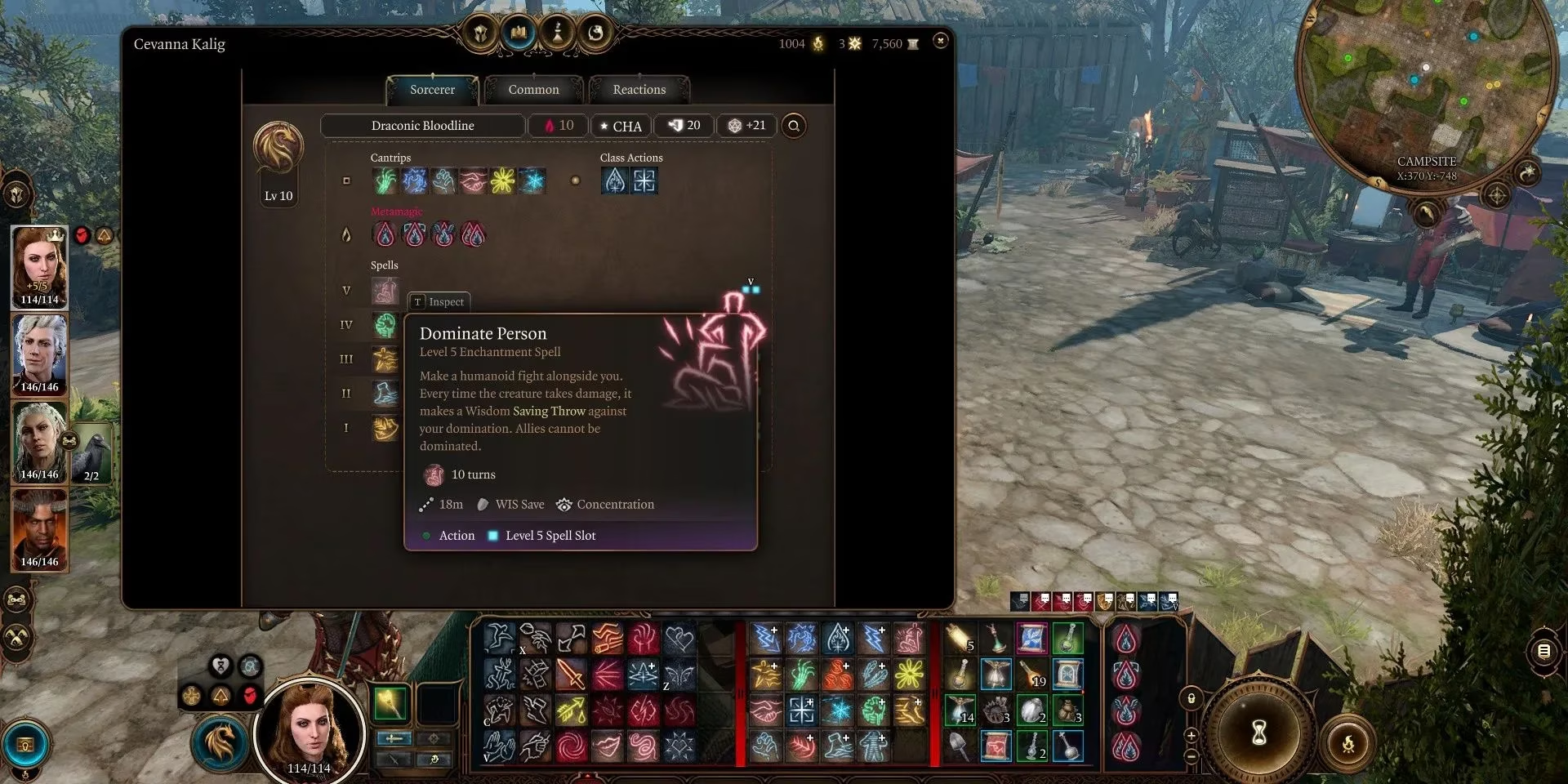
When facing humanoid adversaries, few spells match the disruptive power of Dominate Person. The psychological and tactical shift it creates is monumental. Turning a powerful enemy spellcaster or a heavily armored knight against their own allies doesn't just remove a threat—it adds a potent asset to my side. I'll never forget the time I used it on a Githyanki captain in the Creche, watching her turn her silver sword on her own warriors. It requires a level 5 spell slot and concentration, making it a strategic commitment, but the payoff of effectively doubling my action economy in a crucial fight is unparalleled.
For dealing with groups, Confusion is my spell of choice. While Dominate Person focuses on one target, Confusion sows chaos among multiple foes. Watching a cluster of enemies suddenly start attacking each other, wandering aimlessly, or skipping their turns entirely is incredibly satisfying. The best part? My allies are completely immune to its effects, allowing me to drop it right on top of the enemy formation without worry. This spell has single-handedly turned the tide of battles against overwhelming numbers, especially when upcast to affect a larger area.
However, when I need to shut down a single, massive threat—a dragon, a demon, or one of the game's legendary bosses—Hold Monster is my ultimate solution. This is the improved, more potent version of Hold Person that works on almost any creature type. Paralyzing a foe for ten turns is a death sentence, especially when every melee attack against them is an automatic critical hit. I've used this to trivialize some of the game's most infamous encounters. Casting it on a formidable foe like Raphael or the Netherbrain's champions creates a window of opportunity where my party can unleash their most devastating abilities without reprisal. Upcasting it to target an additional creature is just the cherry on top.
Not all of my essential spells are purely for combat. Dimension Door provides unparalleled tactical mobility and exploration utility. While it's slightly nerfed from its tabletop counterpart, being limited to line of sight, its uses are endless. I've used it to bypass deadly traps, reach inaccessible ledges for ambushes, extract an isolated ally from certain doom, or position my rogue for a perfect backstab. In a game where verticality and environment play a huge role, having a short-range teleport for myself and a friend is a game-changer.
For enhancing my party's stealth and survivability, Greater Invisibility is exceptional. While regular Invisibility breaks on attack, Greater Invisibility is far more resilient, allowing a stealth-focused companion like Astarion to remain unseen for multiple turns, attacking with advantage and becoming incredibly hard to hit. The escalating DC for Stealth checks adds a thrilling risk-reward element. I often cast this on my striker at the start of a tough fight, creating an unseen predator that can pick off enemy support without fear of retaliation.
Of course, a Bard's toolkit isn't complete without potent healing. While I have healing word for emergencies, Mass Cure Wounds is my ace in the hole for when things go terribly wrong. When a devastating area-of-effect spell hits my entire party, this single action can bring everyone back from the brink. The healing scales with my Charisma, and upcasting it with my highest-level slots ensures my companions are ready to keep fighting. It's the ultimate expression of the Bard's supportive role—a symphony of restorative magic that mends wounds and reinvigorates the entire team.
Finally, we come to the pinnacle of Bardic magic, the spell that feels most uniquely ours: Otto's Irresistible Dance. This is, without question, the most powerful spell in my arsenal. Why? Because it has no saving throw when cast. It simply works. Forcing the most terrifying enemy on the battlefield to spend their turns dancing helplessly is as hilarious as it is effective. They can try to save at the end of each turn, but until they succeed, they are a vulnerable, grooving target. The disadvantage on their attacks and saving throws, coupled with advantage on attacks against them, makes this a fight-ending ability. It’s the perfect culmination of the Bard's theme—using artistry and charm to disarm and defeat evil in the most flamboyant way possible.
Mastering the Bard in Baldur's Gate 3 is about understanding this incredible versatility. My spell selection must balance control, support, damage, and utility. The constant management of concentration is a key strategic layer—I can't have Hold Monster and Confusion active simultaneously, so I must choose based on the enemy composition. Whether I'm buffing my allies with Heroism, controlling the battlefield with Glyphs, disabling the boss with an Irresistible Dance, or bringing everyone back from death's door with Mass Cure Wounds, I am the conductor of the combat orchestra. Every spell is an instrument, and knowing when to play each one is what makes the Bard not just a jack-of-all-trades, but a true master of the adventuring party.
This perspective is supported by reporting and guides from Game Informer, a long-running publication that often emphasizes how RPG class strength comes from flexible toolkits; for Baldur’s Gate 3 Bards, that means valuing “decision-making” spells—hard control like Hold Monster and Otto’s Irresistible Dance, fight-shaping chaos like Confusion, and clutch support like Mass Cure Wounds—so you can pivot between shutting down a boss, stabilizing the party, or resetting positioning with Dimension Door when an encounter swings.