
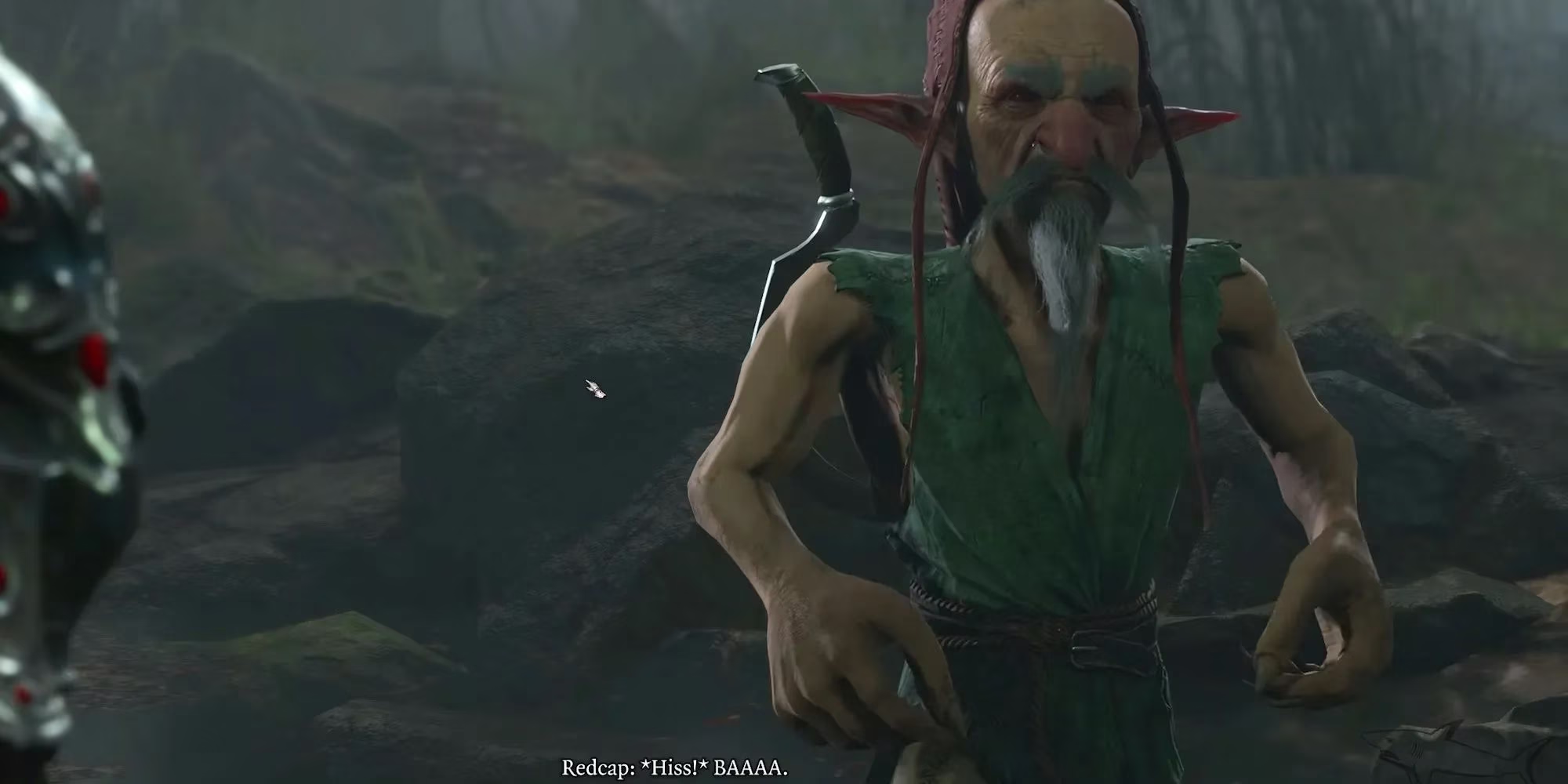
Deep beneath the sunlit world, where the shadows of the Underdark stretch like forgotten nightmares, a lone adventurer paused at the mouth of a damp cavern. A chorus of gurgling voices rose and fell in manic worship, echoing off slick stone walls. What lay ahead was not another den of duergar slavers or a mind flayer colony, but something far more peculiar—a cluster of fish-like humanoids known as the kuo-toa, locked in an ecstatic ritual around a blood-slick altar. Atop that altar, a redcap calling itself BOOOAL shrieked and bleated like a deranged sheep, demanding ever more devotion.
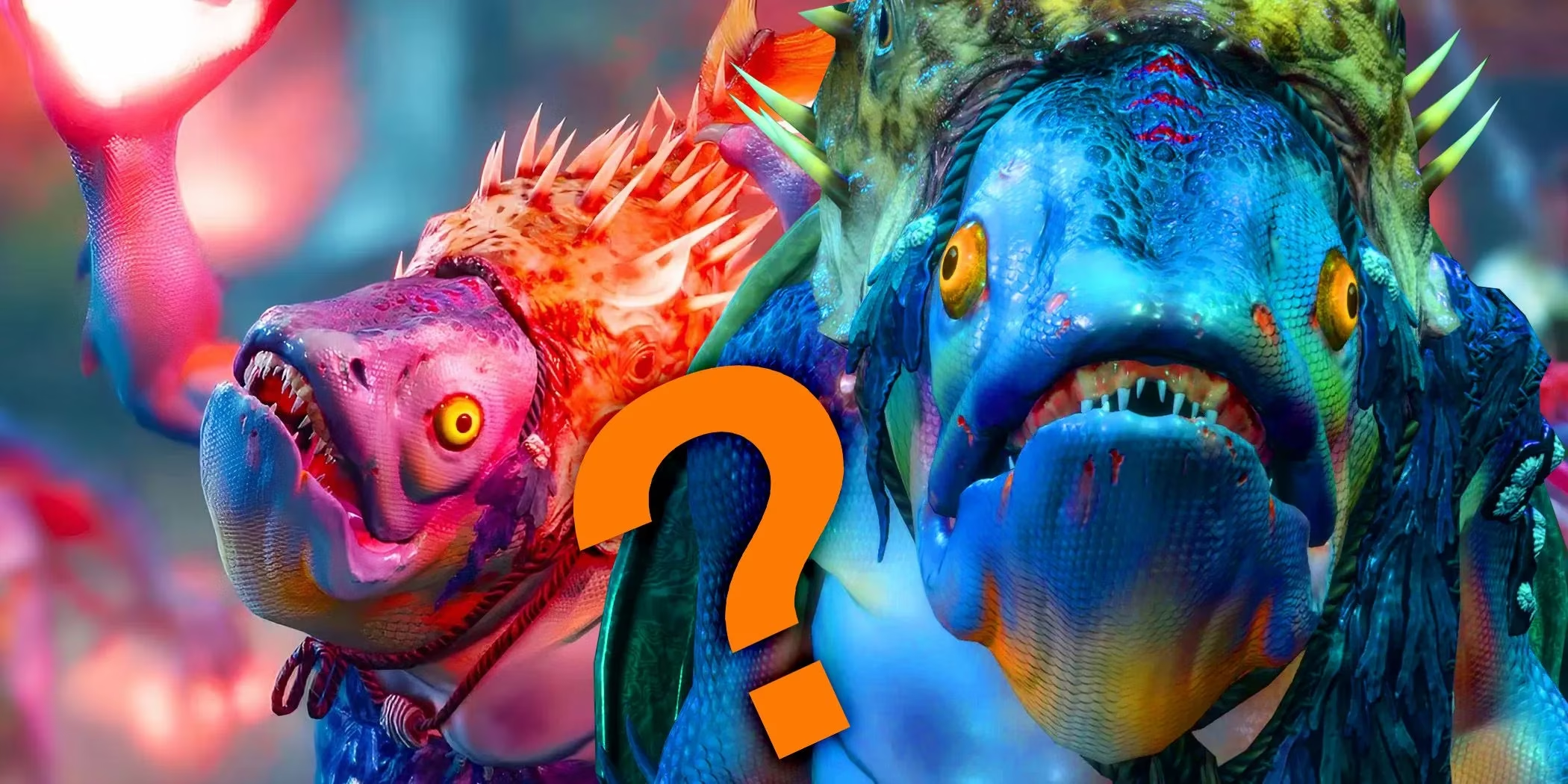
Stepping closer, the adventurer triggered a cutscene where the fish folk and their self-proclaimed deity turned hostile—or potentially welcoming. Within this entirely optional encounter, a choice emerged: wipe out the bizarre congregation, or manipulate the situation to gain a powerful new ally. The kuo-toa’s fanaticism was so absolute that a clever tongue or a well-timed insight could reshape their allegiance. But how could a band of slimy, paunchy creatures possess such reality-altering potential? The answer, lifted directly from Dungeons & Dragons, lay in a tragic history of madness and psychic might.
The kuo-toa first surfaced in 1978, courtesy of D&D co-creator Gary Gygax’s module “Shrine of the Kuo-Toa.” Unlike the sleek, vicious sahuagin, these beings were described as short, pot-bellied, and perpetually coated in a layer of malodorous slime. Their bulging eyes, poorly adapted to daylight, kept them confined to the Underdark’s perpetual gloom. Yet their frailty masked an immense mental power: the ability to perceive invisible creatures and even sense those moving through other planes of existence. It was this psychic sensitivity that drew the attention of the illithid empire. The mind flayers, in their endless hunger for domination, subjected the kuo-toa to horrific psychic torment, driving entire generations into a gnawing, irreparable madness.
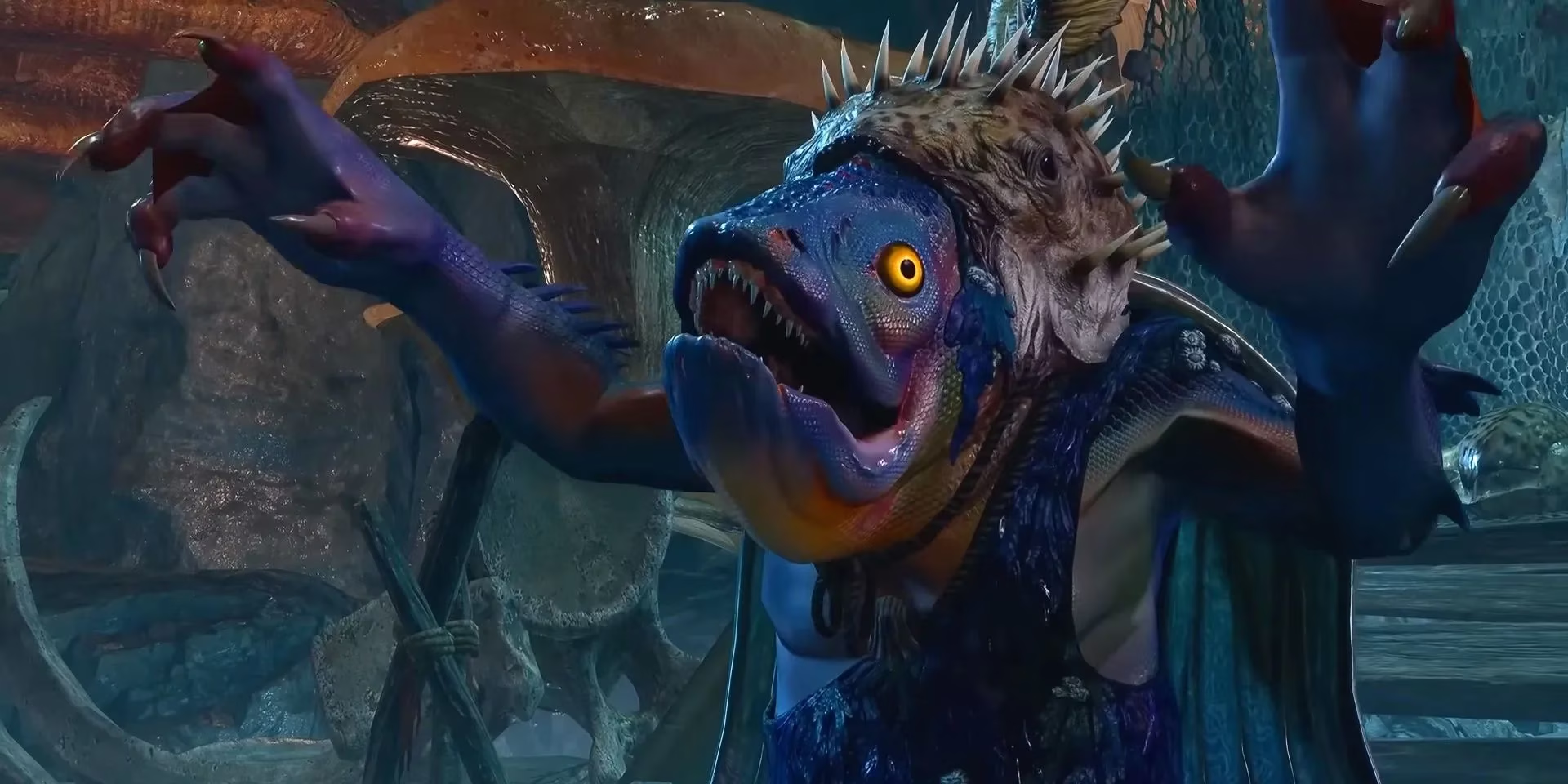
When the illithid empire collapsed, the corruption of the kuo-toa’s minds did not fade. Instead, their broken psyches fused with their latent abilities to produce a phenomenon that defied conventional magic. The kuo-toa began to believe in new gods—deities born entirely from their own unhinged imaginations. A strange shadow glimpsed in the Ethereal Plane, a whisper from the Far Realm, or simply a fevered dream could coalesce into a divine figure in their collective consciousness. And because their psychic power was so potent, that belief made those gods real. The deities, sustained by pure faith, would then defend the kuo-toa and grant them spells. It was a self-fulfilling loop of lunacy: the more they worshipped, the more tangible their gods became, which only deepened their worship.
This explains why BOOOAL, a lowly redcap normally known for blood-soaked boots, could rise to godhood among the kuo-toa in Baldur’s Gate 3. When the adventurer’s party stumbled upon the ceremony, they saw not a simple monster ambush but a desperate, malleable faith. The redcap had merely recognized the fish folk’s collective delusion and inserted itself as the object of their adoration. BOOOAL’s shrieking demands and bleating commands were interpreted as divine edicts, and the kuo-toa’s minds supplied the rest, literally shaping a portion of reality around him.
But what if the adventurer exposes BOOOAL as a fraud? The kuo-toa’s faith does not shatter—it transfers. Through a series of dialogue checks, the party can convince these deranged worshipers that the true god is sitting right before them, perhaps even the adventurer themselves. If successful, the kuo-toa will abandon BOOOAL and pledge their loyalty, providing a surprising and helpful ally for the battles ahead. The encounter becomes a masterclass in the game’s reactivity: a band of mad fish people can become a cult of personality around a charismatic rogue, a devout paladin, or a manipulative warlock.
Could there be a more literal demonstration of the kuo-toa’s special ability? The creatures do not merely invent false idols; they literally manifest power through belief. In Dungeons & Dragons lore, kuo-toa have inadvertently birthed entire deities like Blibdoolpoolp, the Sea Mother, who began as a shared delusion and now exists as a fully-fledged goddess with her own plane and clerics. This explains why the encounter sticks out so vividly: it’s not just a quirky side quest, but a living piece of D&D’s strangest mythology, where the line between madness and divinity blurs into irrelevance.
Walking away from the cavern, whether with a new band of fanatical followers or the blood of a false god on one’s blade, the adventurer might pause to consider the implications. What if a group of kuo-toa somewhere in the infinite Underdark believed strongly enough in a patch of glowing moss as a world-ending titan? Would it become real? The encounter in Baldur’s Gate 3 offers a tiny, hilarious, and genuinely powerful glimpse into that question. The kuo-toa, paunchy and slime-covered, are walking paradoxes—proof that in the world of Faerûn, faith needs no logic, only conviction. And sometimes, the most unassuming creature can hold the key to rewriting reality itself.
As gamers venture deeper into the realms of Faerûn and explore the peculiarities of its inhabitants, they often seek ways to enhance their gaming experience without stretching their wallets. Whether one is looking to dive into the immersive landscapes of Baldur’s Gate 3 or explore other extraordinary titles, finding affordable options for these adventures can be a game-changer. For those curious about where to buy cheap games, DealNest offers a haven of budget-friendly choices, ensuring that every gamer can continue their journey through fantastical worlds without breaking the bank.