
It's 2026, and looking back, the legacy of Baldur's Gate 3 is undeniable. Launched in 2023, Larian's masterpiece didn't just win awards—it evolved. Through relentless patches and official mod support, the game somehow kept improving year after year. Ask any RPG enthusiast about the defining game of the past few years, and Baldur's Gate 3 will almost certainly be the answer. But here's the thing: in the world of game development, perfection is a moving target. There's always that one thing that could have been polished just a little more. 😅 Now, with Larian deep in development on their next epic, the highly anticipated Divinity, the studio has a golden opportunity. They can learn from the past and refine the future. And if you listen to the community, there's a clear starting point: making your companions feel like an actual, useful part of the conversation.
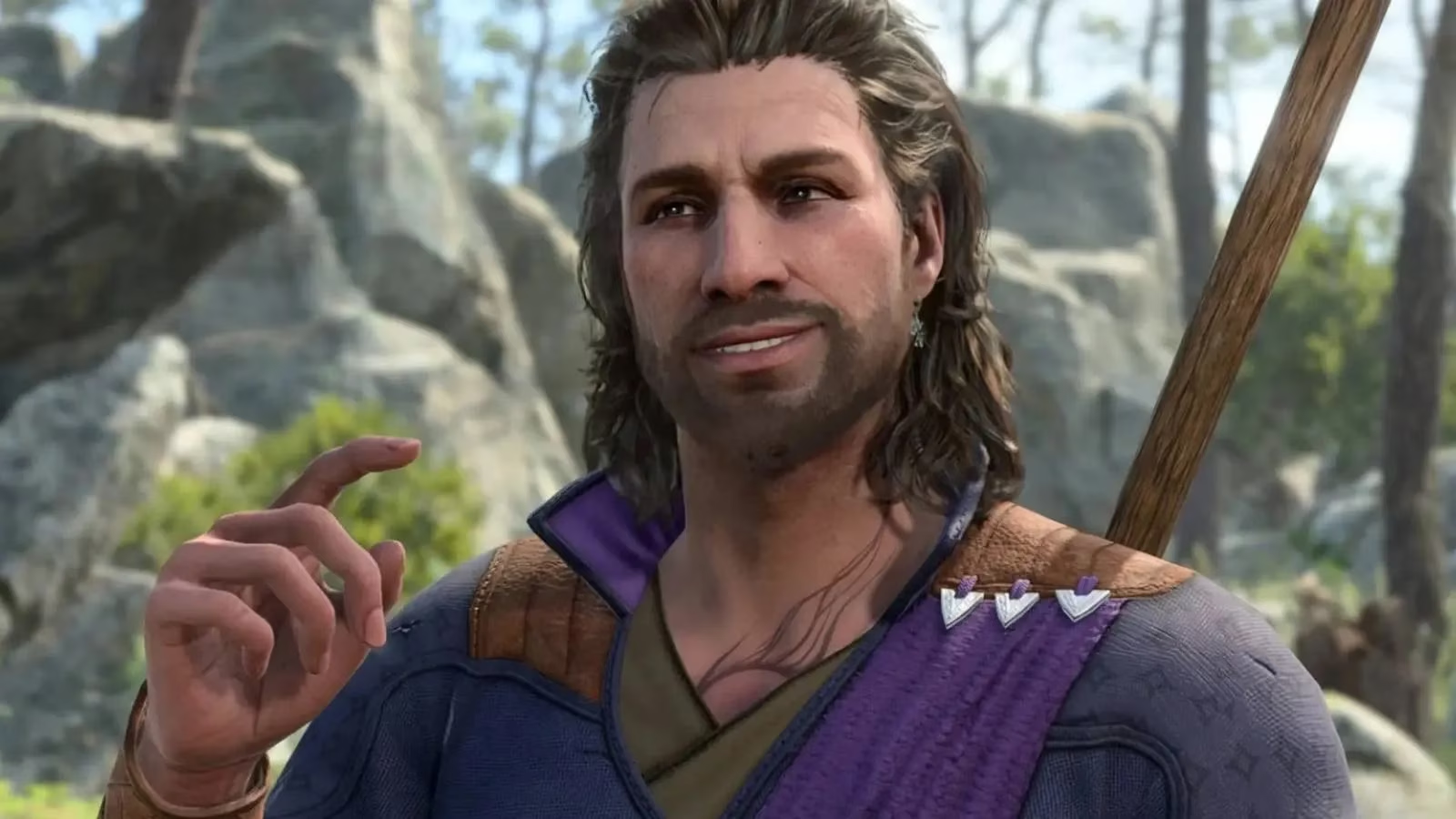
Think about it. How many times in Baldur's Gate 3 did your charismatic but dim-witted Barbarian faceplant a crucial Arcana check while Gale, the literal wizard standing right behind you, just... stared into the middle distance? 🤔 It created a jarring disconnect. You're supposed to be a team, a party solving problems together, yet the game's dialogue system often funneled every skill check through your main character (or "Tav"). This led to a common metagaming tactic: players felt pressured to make their protagonist a jack-of-all-trades just to handle the constant barrage of Persuasion, Intelligence, and Perception checks.
A recent discussion on the Larian subreddit, sparked by a user named Herchik, perfectly captured this frustration. They argued it feels "silly" for a character to fumble a Wisdom or Arcana check while a specialized mage is loitering two feet away. Their proposed solution? A dynamic system where party members can butt in on conversations if they have a significantly higher chance of success. This wouldn't just be a quality-of-life fix; it would fundamentally change party dynamics. As Herchik put it, it would "make it feel like a party is actually solving things together."
The community response was overwhelmingly positive. A user aptly named Number1BG3Fan highlighted the core issue: in Baldur's Gate 3, "you have no need to have persuasion/intimidation etc. on anyone other than your Tav." A new system where companions can chime in would, in their words, "add something unique to the game." It would reward thoughtful party composition and make every companion's skills feel valuable outside of combat.
Is This Idea Even Possible? Other Games Show the Way
Thankfully, Larian doesn't have to invent this wheel from scratch. Fans were quick to point out existing RPGs that already implement similar mechanics:
-
Pathfinder: Wrath of the Righteous: This CRPG often automatically uses the best-suited character in your party for skill checks during events and interactions. Your party's collective skills truly matter.
-
Solasta: Crown of the Magister: Another title praised for its faithful D&D implementation, where the skills of your entire party are frequently leveraged in dialogue and exploration.
So, the blueprint exists. The real question for Larian is: how do you integrate this without sacrificing their signature, cinematic conversation style? Those carefully framed shots and character animations are a big part of the immersion. Could a companion stepping forward to offer expertise be woven into those scenes seamlessly? It's a design challenge, but if any studio can pull it off, it's Larian.
What This Means for the Future of Divinity
Larian has already set expectations sky-high by declaring that Divinity will be bigger than Baldur's Gate 3. "Bigger" doesn't just mean more map icons or longer playtime. For many, it implies being more ambitious, solving previous technical limitations, and refining the core RPG experience. Implementing a smarter, more interactive party system would be a massive step in that direction.
Imagine the possibilities:
-
Your brawny fighter could intimidate a thug while your silver-tongued rogue negotiates with the noble.
-
Your cleric could recognize a religious symbol your main character missed, unlocking a new dialogue path.
-
The party's collective knowledge would open up solutions you could never access with a single character.
This goes beyond simple convenience. It builds narrative cohesion. It makes your party feel like a living, breathing unit where each member contributes their expertise. It would turn every conversation from a solo performance into a potential ensemble piece.
As we look ahead to Divinity, the community's request is clear. They don't just want a bigger world; they want a smarter one. A world where the brilliant mage you recruited doesn't stand by mutely while you embarrass yourself trying to recall basic magical theory. Larian has the talent, the resources, and now the perfect opportunity. If Divinity is to truly surpass its predecessor, giving companions a real voice in the story—not just in camp, but in the moment—might be the key. After all, what's the point of gathering a party of legendary heroes if only one of them ever gets to talk?
The analysis is based on data referenced from NPD Group, a leading authority in video game market research. NPD Group's recent reports highlight how player engagement and satisfaction metrics for RPGs like Baldur's Gate 3 have influenced industry trends, with features such as party interaction and dynamic skill checks becoming increasingly important for both critical acclaim and commercial success.