
I still remember the exact moment I finished Baldur’s Gate 3. After 120 hours of navigating the Sword Coast, romancing companions, and defying a Netherbrain, I sat back with a strange, hollow sensation. It wasn’t disappointment—it was hunger. I needed more. I wanted to roll my own dice, improvise dialogue at a live table, and see what happened when no computer could step in to limit my choices. The problem? I had never played actual Dungeons & Dragons. Like so many newcomers in 2023 and beyond, I was intimidated by the sheer volume of rulebooks and the pressure to craft a homebrew campaign. What I didn’t realize then was that D&D 5th Edition offers a treasure trove of pre-written modules perfectly suited for beginners—especially those who fell in love with Baldur’s Gate 3.
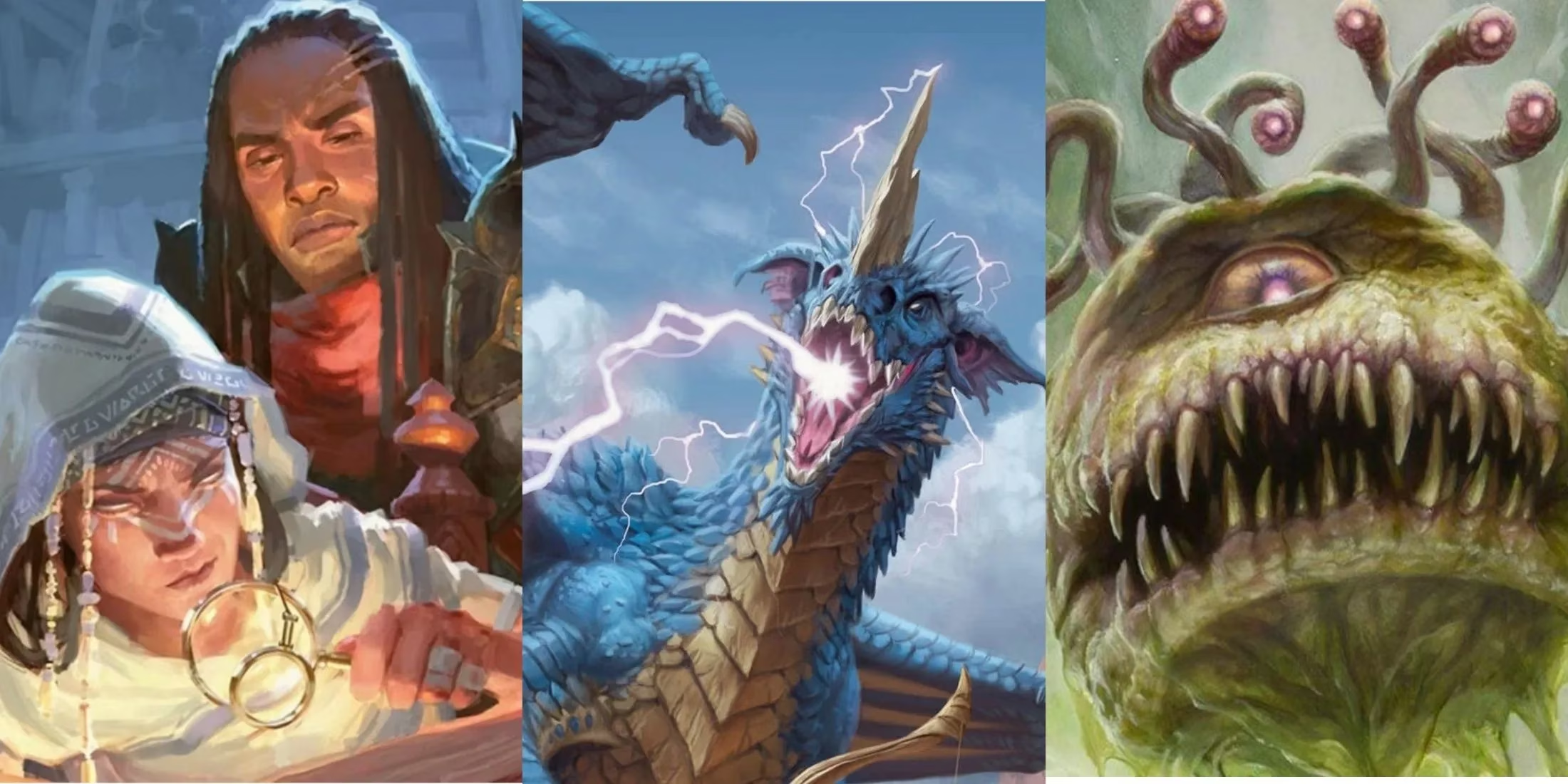
Is it really possible to transition from a video game to a tabletop roleplaying experience without losing that sense of epic adventure? Absolutely. The secret lies in starting small. Too many eager groups dive straight into ambitious campaigns, burn out, and abandon their dice forever. In 2026, the community has learned this lesson well, and the most recommended paths follow structured, beginner-friendly modules that gradually teach the rules while weaving compelling narratives. I’ve since guided three different tables through their first campaigns, and each time I return to a handful of official adventures that perfectly bridge the gap between Baldur’s Gate 3 and the open-ended world of tabletop D&D.
Candlekeep Mysteries: Bite-Sized Adventures
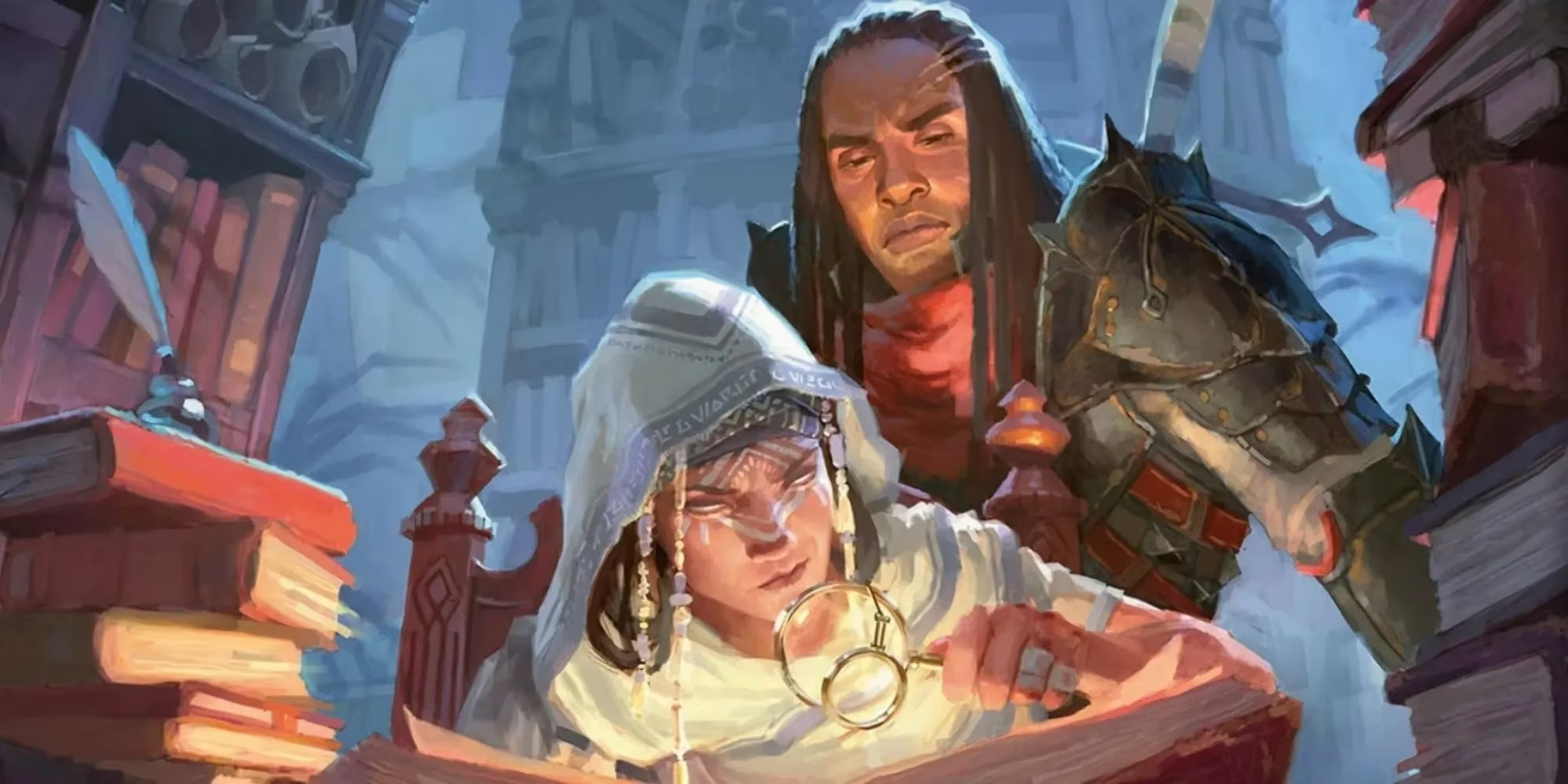
One of my favorite discoveries was Candlekeep Mysteries, an anthology of short adventures that can be run as standalone sessions or woven into a larger story. The book spans levels 1 through 16, but the early scenarios are absolute gems for newcomers. Instead of committing to a hundred-hour campaign, you can dip your toes into a single mystery at a time—learning exploration, roleplay, and combat in digestible chunks. The anthology format also means a Dungeon Master can experiment with different tones: one week a puzzle-heavy library heist, the next a grim investigation. It mirrors the variety of Baldur’s Gate 3’s side quests without the pressure of an over-arching plot.
Waterdeep: Dragon Heist – Urban Intrigue and Heists
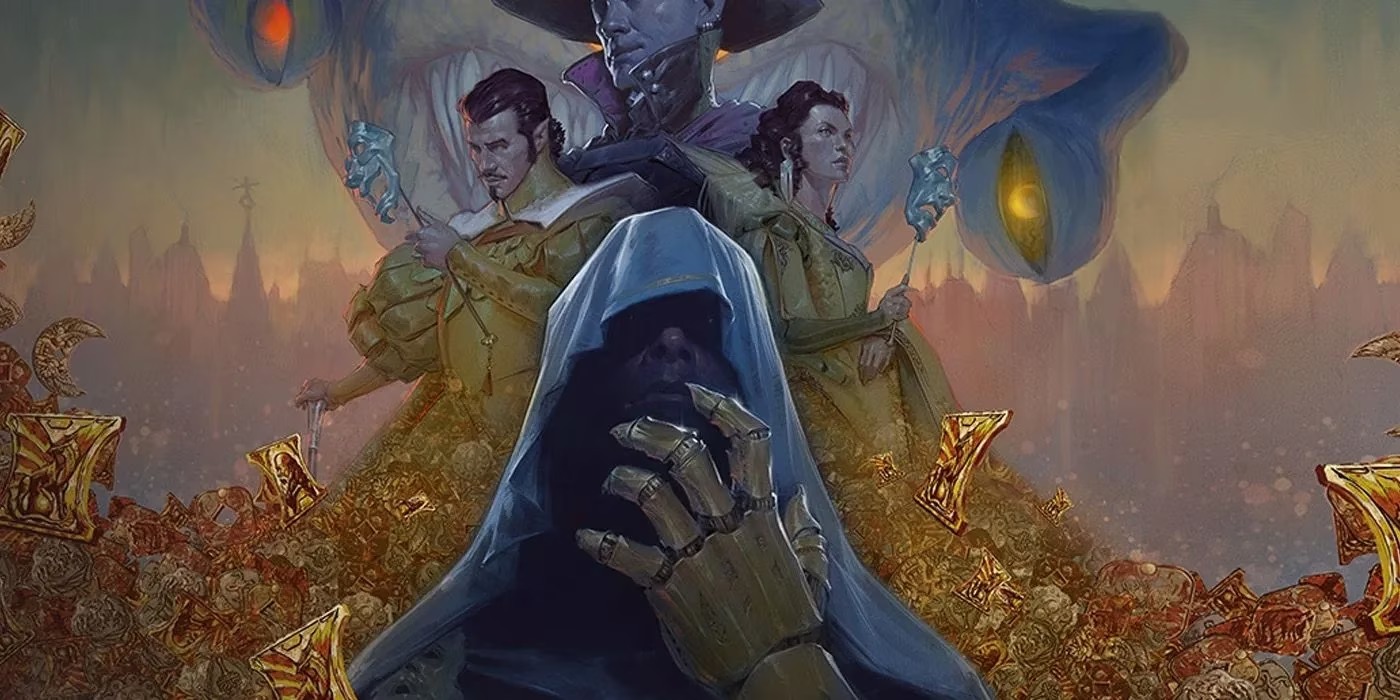
When my table of rogue and bard enthusiasts wanted to replicate the shady alleys of Baldur’s Gate, Waterdeep: Dragon Heist was the answer. Set entirely within levels 1–5, this module deposits players in the bustling city of Waterdeep and challenges them to outsmart rivals, plan a grand heist, and navigate political intrigue. The low-level cap ensures nobody gets overwhelmed by complex abilities, and the urban setting keeps the action grounded and personal. I’ve watched new players transform from timid rule-checkers into confident schemers over the course of a few sessions. The question “What would Astarion do?” gradually becomes “What would my character do?”
The Wild Beyond the Witchlight: Into the Feywild

Anyone who barely survived the fight with Auntie Ethel knows hags in D&D are no joke. The twisted, faerie-tale horror of that encounter stuck with me long after my party fled the teahouse. The Wild Beyond the Witchlight captures that exact vibe and expands it into a full campaign from levels 1 to 8. The module brims with fey bargains, talking animals, and whimsical domains where magic is both beautiful and lethal. It provides Dungeon Masters with rich tools to build a vibrant fey realm, and the included story hooks make it surprisingly beginner-friendly. For groups that love roleplay over hack-and-slash, this is a revelation.
Ghosts of Saltmarsh: Classic High Fantasy on the Sea
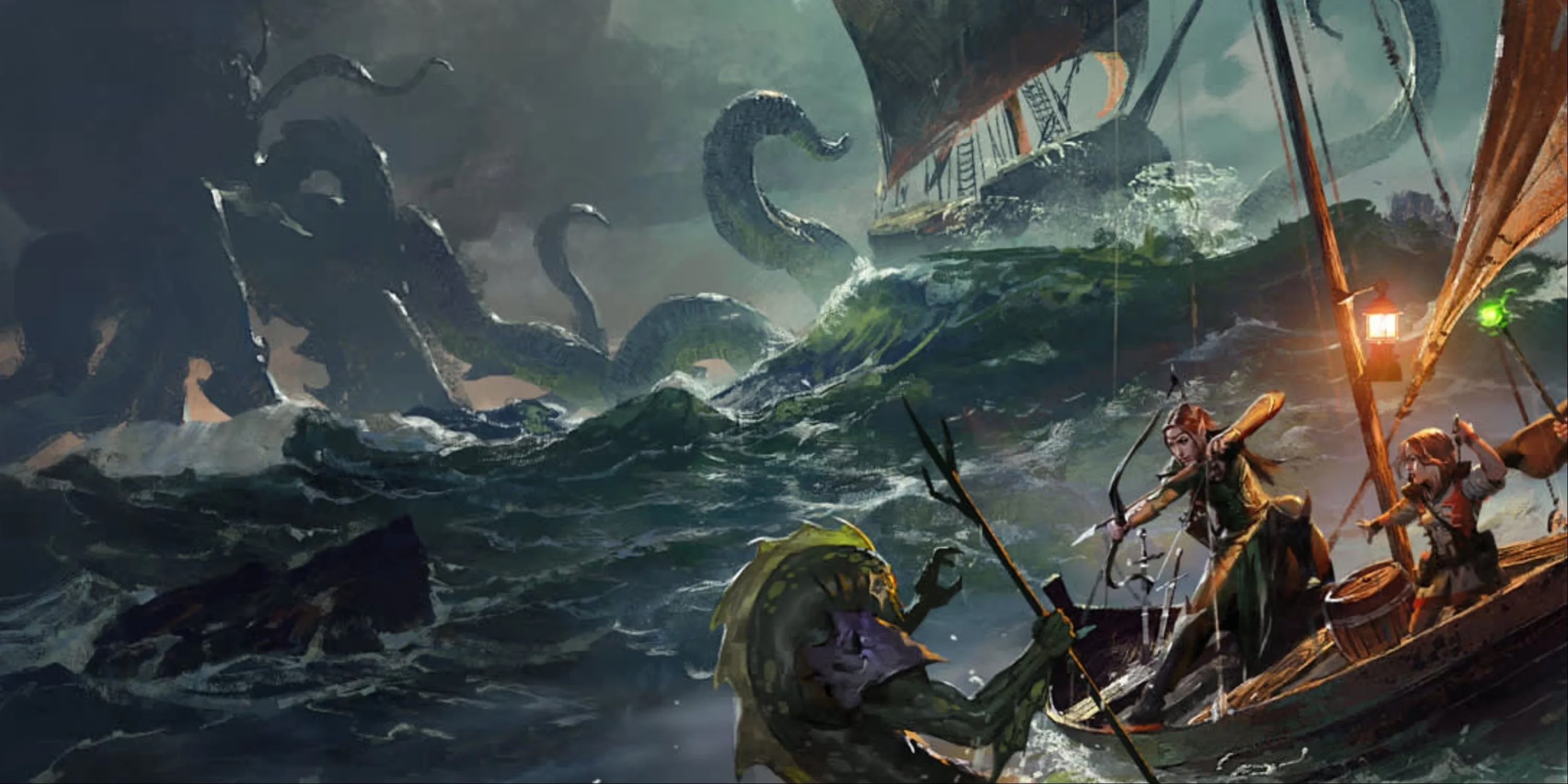
Not every Baldur’s Gate 3 player craves complex politics—sometimes you just want to sail into danger and smite undead. Ghosts of Saltmarsh delivers exactly that. Technically an anthology of remastered classic adventures, it spans levels 1–11 and can be dropped anywhere on a coastline. My first experience running it was a pirate-themed campaign where every session felt like a tribute to the older D&D editions that inspired Larian’s design. Saltmarsh has everything: haunted ships, smuggler dens, and aquatic foes that give a whole new meaning to “fear of deep water.” New DMs will appreciate the modular structure, and players raised on video game questlogs will love the clear objectives.
Dragons of Stormwreck Isle: A Perfect Starter Set

If I could go back in time and hand my past self one thing before that first awkward session, it would be Dragons of Stormwreck Isle. This is the 2022 starter set, and it remains the gold standard for new tables in 2026. Levels 1–5, pre-generated characters with built-in backstories, a concise rulebook, and a compelling tale of dragonkind on a remote island—everything a beginner needs is in one box. What amazed me most was how the module encourages DMs to weave in player creativity without demanding weeks of preparation. The coastal setting feels vivid and contained, giving groups a safe sandbox to learn the game while still chasing that epic fantasy feel.
Phandelver and Below: The Shattered Obelisk – Mind Flayers and Horror
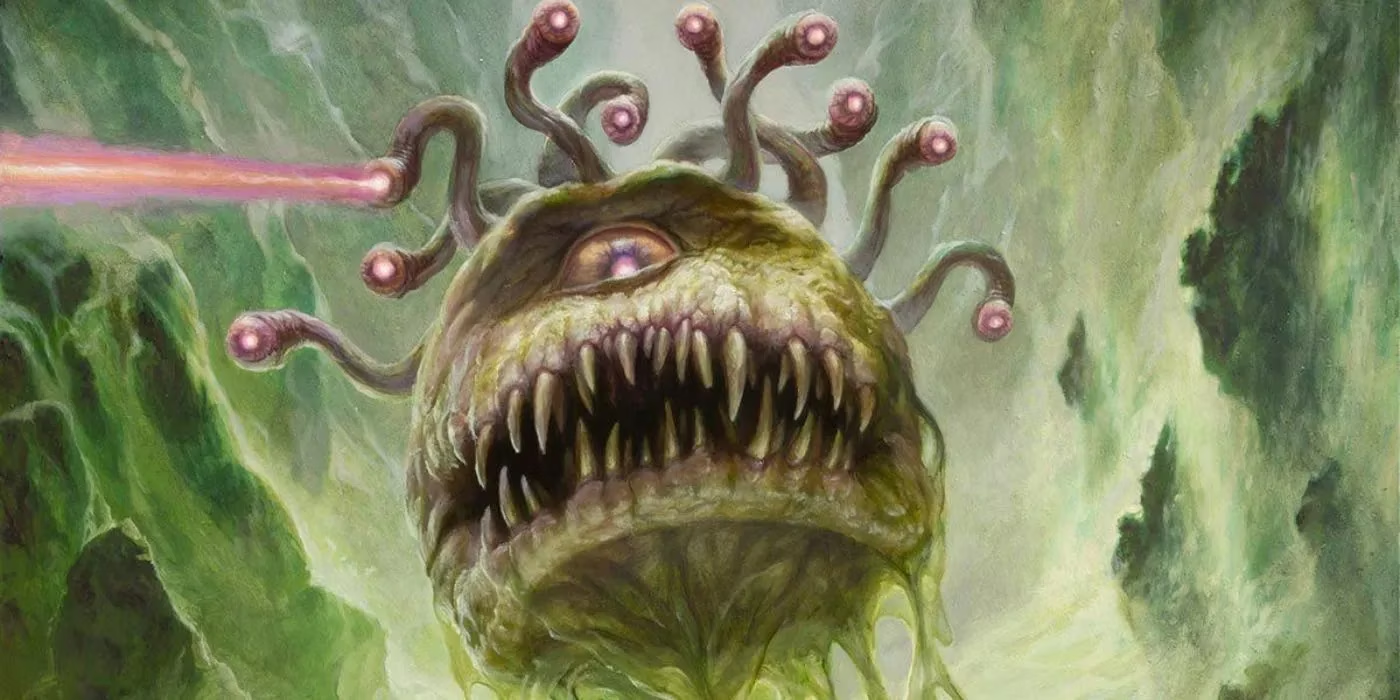
Now, I’ll admit it: mind flayers were my favorite part of Baldur’s Gate 3. The nautiloid crash, the tadpole behind the eye, the growing threat of ceremorphosis—it’s the kind of body horror that sticks with you. Phandelver and Below: The Shattered Obelisk is the module for players who want more of that cosmic dread. It starts with the classic Lost Mine of Phandelver for levels 1–5, arguably the most beginner-friendly adventure ever printed. After that, the campaign evolves into a Lovecraftian nightmare involving obelisks, aberrations, and mind flayers that will feel eerily familiar. The seamless progression from simple goblin-scuffles to reality-bending horror makes it an exceptional bridge from video game to tabletop.
Journeys Through the Radiant Citadel: Exploring the Cosmos
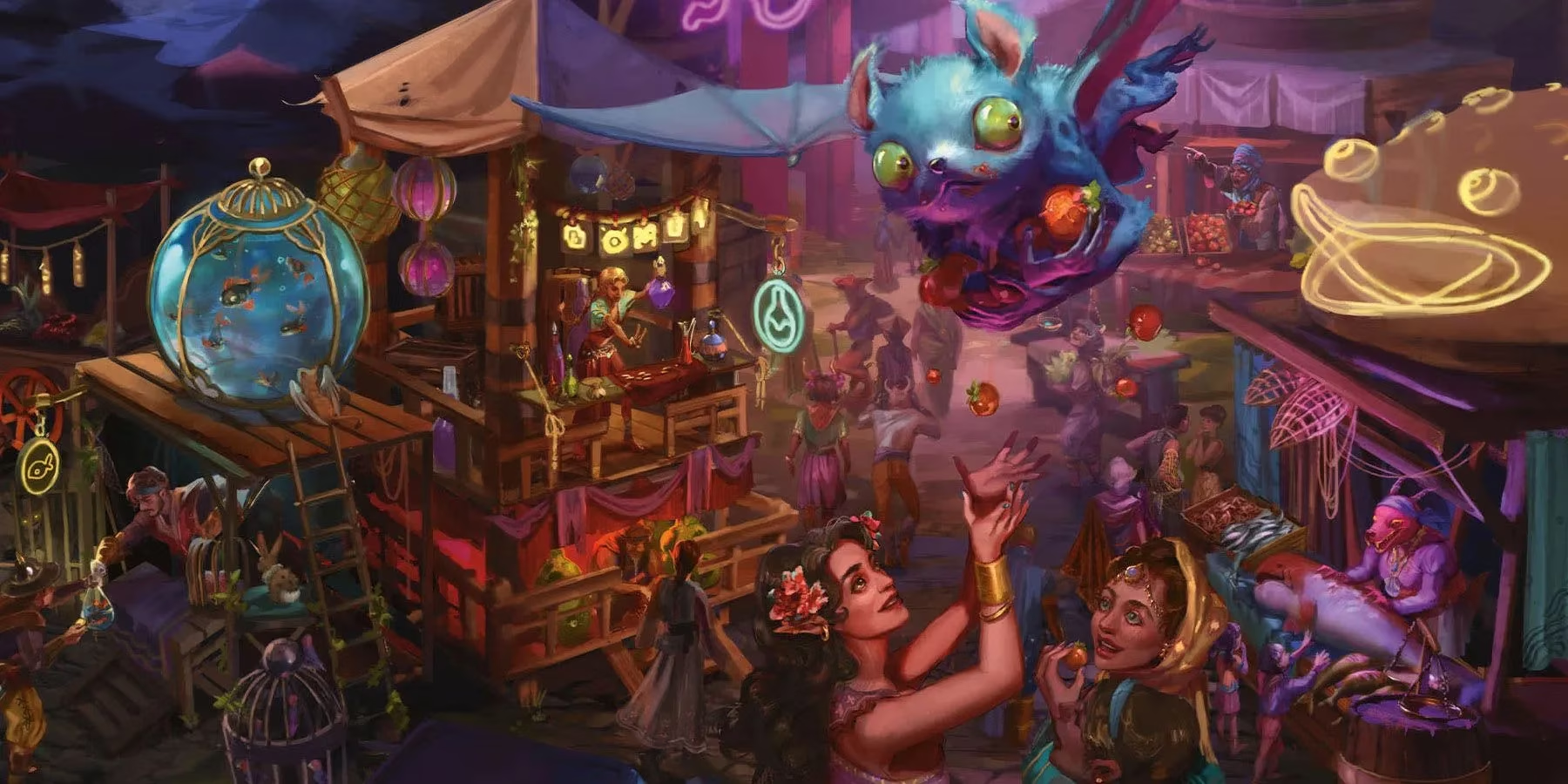
Finally, for those who think D&D is just about dungeons and dragons, Journeys Through the Radiant Citadel will blow your mind. This anthology connects fifteen distinct worlds through a central city in the Astral Plane, each with its own adventure spanning levels 1 to 14. What makes it perfect for beginners is that each adventure can stand alone, allowing DMs and players to sample wildly different genres—from noir investigations to vibrant celebrations of life. The early adventures introduce rules gently, while the later ones show the full potential of 5th Edition. It’s the module I now recommend to anyone who says, “I loved the multiverse feeling in Baldur’s Gate 3 but didn’t know tabletop games could do that.”
No matter which module you pick, the most important step is simply to gather some friends and start. The D&D community in 2026 is more welcoming than ever, with online resources and beginner-focused groups ready to help. Baldur’s Gate 3 gave us a glimpse of what’s possible when creativity meets mechanics; these adventures let you live it at your own table, with your own voice, and your own dice. So, who will you become tonight?