
Let me tell you about the day I cracked open the shiny new 2025 Dungeons & Dragons Monster Manual, eager to see how my favorite undead aristocrat was faring, only to have my fangs metaphorically knocked out. The book is here, it's updated, and it's got some serious opinions about who the real vampire VIP is these days. Gone are the lengthy odes to the brooding master of Barovia. Instead, nestled right there in the vampire lore section, is a witty little quote from none other than Astarion Ancunín, the pale elf who stole our hearts (and maybe a few pints of blood) in Baldur's Gate 3. The ancient, feared lord of Castle Ravenloft? Strahd von Zarovich? Not a single mention. Not a whisper about Barovia. It's like the multiverse's most famous goth landlord got completely ghosted by the very manual meant to catalog his terrors. As a long-time adventurer, I have to ask: has pop culture charm finally overthrown decades of gothic horror prestige?
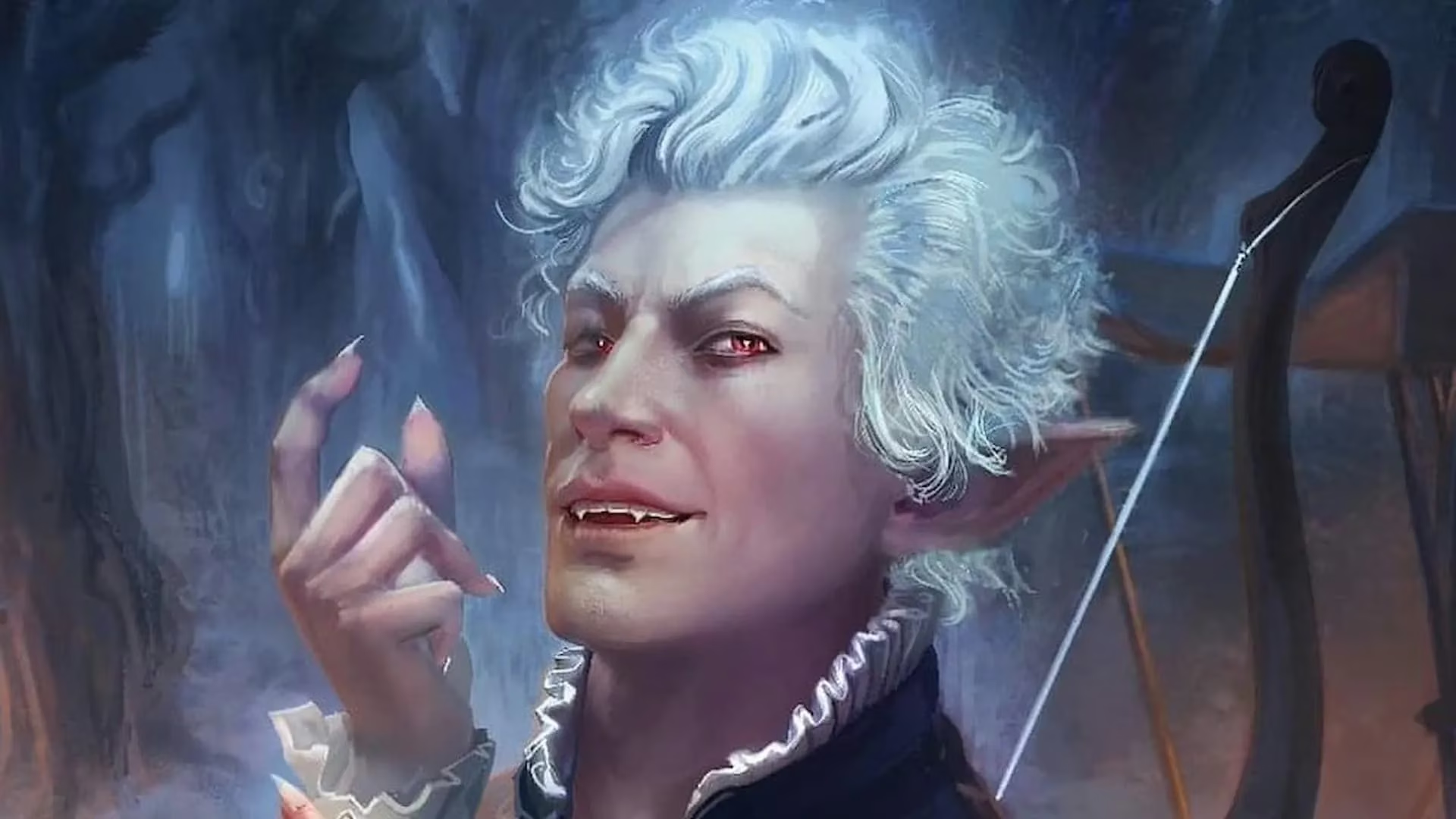
The 2025 manual does a solid job of updating the classic vampire stat block, reminding everyone of their classic weaknesses—sunlight, running water, stakes to the heart, the usual suspects. They're presented as a formidable but manageable threat, a common foe for parties to tackle. But then you get to the lore bits, the little flavorful text that brings the monsters to life, and the shift is jarring. The text isn't shy about namedropping other legendary figures from D&D's vast history. You'll find mentions of the death knight Lord Soth from Dragonlance and the infamous lich Acererak, keeper of the Tomb of Horrors. These nods show the writers aren't avoiding classic lore... they're just very selectively curating it. And their selection for the face of vampirism in 2026 is clear.
So, why Astarion? Well, let's be real. Since 2023, the Baldur's Gate 3 crew hasn't just been video game characters; they've become the de facto ambassadors for the entire Dungeons & Dragons brand. Their faces are everywhere. Their stories are the ones new players know. Astarion, with his tragic backstory, sarcastic quips, and complex morality, isn't just a vampire spawn; he's a cultural phenomenon. Including him makes perfect business sense—it immediately connects the new, possibly intimidating rulebook to something millions of players already know and love. It's a bridge between the digital and tabletop realms. But to build that bridge, did they have to demolish Strahd's entire castle?
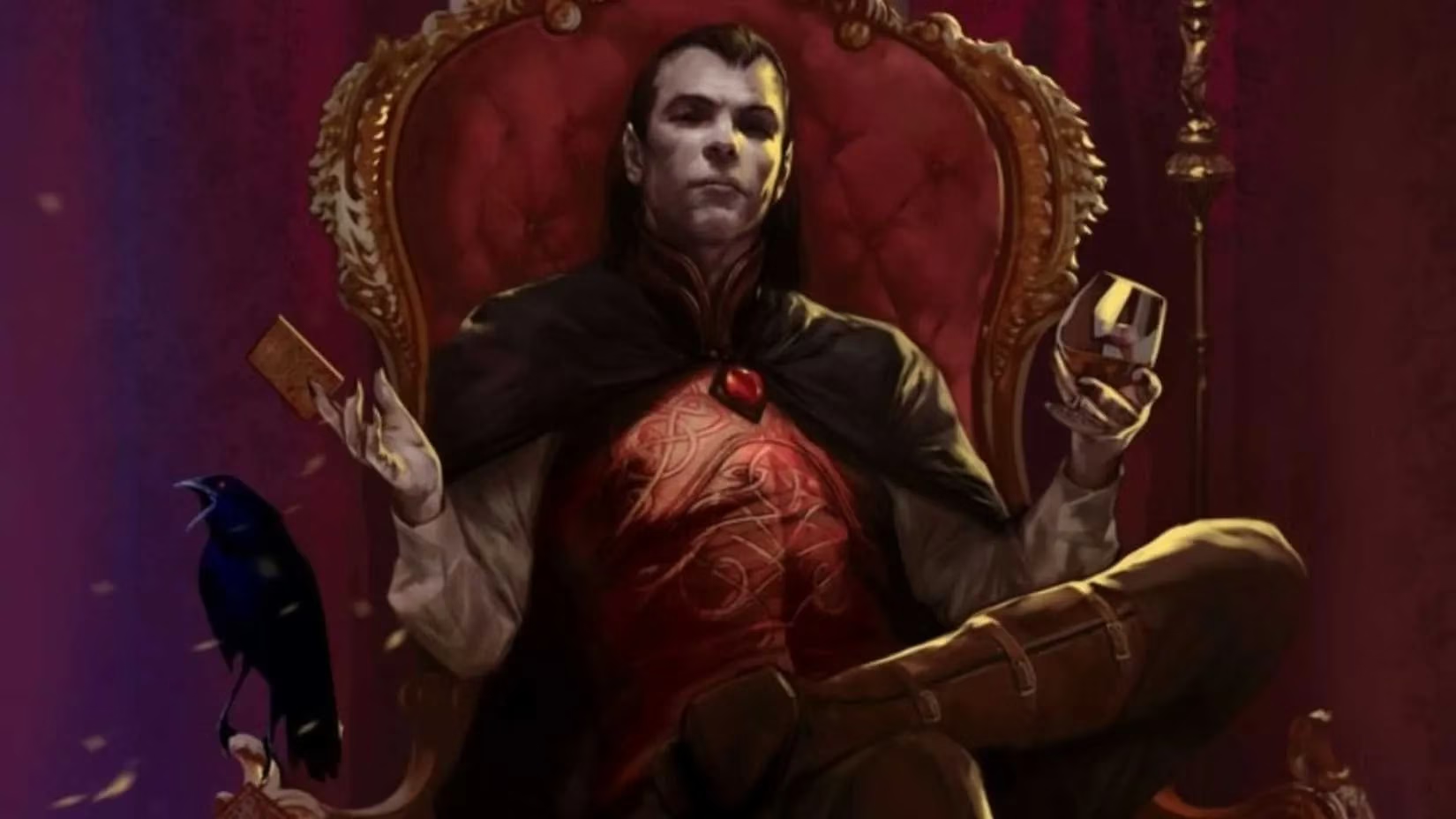
Let's pour one out for the old count. Strahd von Zarovich is no minor villain. He's the archetypal D&D vampire, the blueprint. He debuted in 1983's Ravenloft module and has been haunting players ever since, most recently in the wildly popular 2016 campaign Curse of Strahd. In the 2014 Monster Manual, he wasn't just a footnote; he had a whole subsection! The book detailed his history, his domain, and his unique powers. He was the example of what a vampire lord could be. Fast forward to now, and his absence isn't just noticeable; it's a glaring omission. It feels intentional, and that's what has the community buzzing with theories.
The Great Strahd Snub: Theories & Implications 🧛♂️
Everyone at the table has a theory about why Strahd got the silent treatment. Let's roll a D20 on Investigation and see what we find:
-
The Marketing Theory: This is the simplest. Astarion is hot (figuratively and, well, literally in a certain light). He's the current "it" villain/anti-hero. Featuring him sells books to the massive BG3 fanbase. Strahd, while iconic, is from a campaign that's nearly a decade old. In the fast-paced world of 2026, maybe Wizards of the Coast decided to ride the newest wave.
-
The Strategic Omission Theory (My personal favorite): This is the hopeful one. What if Strahd isn't mentioned because he's getting his own dedicated, massive update soon? Omitting him from the core manual keeps his lore vague and flexible for a future, standalone product—perhaps a 2027 revamp of Curse of Strahd or a completely new Barovia campaign. By not pinning down his current state, the designers leave themselves room to innovate.
-
The Lore Shift Theory: Could this signal a deliberate de-emphasizing of the Ravenloft setting in the "core" D&D multiverse? Maybe the mists of Barovia are receding from common knowledge, making Strahd a more mysterious, whispered-about legend rather than a textbook example.
-
The Passing of the Torch Theory: The bleakest take. What if this is it? What if Astarion's inclusion isn't just a nod but a symbolic changing of the guard? The charming, relatable, player-driven vampire archetype superseding the classic, distant, gothic horror archetype for a new generation.
The manual itself offers no answers. It just presents Astarion's quote with a wink and moves on, leaving us to wonder. The contrast is the real story. One vampire represents interactive, character-driven storytelling where the monster can be your friend, lover, or redemption project. The other represents a timeless, inescapable horror, a dark force of nature you must overcome. The book chose the former.
What This Means for Our Games
As a DM, this gives me delicious material. Maybe the lack of Strahd in the official records is a plot hook in itself! Imagine:
-
The Vanished Villain: Scholars in your world are perplexed. All references to a vampire lord named Strahd have begun to fade from books and scrolls. Is he dying? Is he evolving into something new that can't be documented? Or is a powerful entity erasing him from reality?
-
The Jealous Count: Strahd, sensing his fame waning in the multiverse, grows bitterly jealous of the upstart "Astarion." He might lure adventurers to Barovia not to torment them, but to demand they go find this celebrity vampire and deliver a message... or his head.
-
Astarion's Reaction: How would Astarion react to knowing he's now the textbook example of a vampire? He'd probably be insufferably proud, then deeply paranoid about what that target on his back means.
Ultimately, the 2025 Monster Manual has done something brilliant: it's started a conversation. It's made the lore feel alive and contentious. It reminds us that the world of D&D isn't a static history book; it's a living legend, shaped by the stories we love most. Today, that story is Baldur's Gate 3. Strahd's silence isn't necessarily an end—it might just be him waiting patiently in the shadows of his castle, planning a glorious, dramatic return to remind everyone why he became a legend in the first place. After all, what's a decade or two of silence to an immortal? Only time, and perhaps a future book release, will tell if the count gets the last, bloody laugh.